 SusoRedondo / Wikimedia Commons, CC BY-SA 4.0
Living Differently · Feature
What regeneration means for Tierra Luma
A fashionable word with no fixed definition. What the soil scientists, the European Commission and Spain's own habitat studies say about it, and what Tierra Luma intends to do once it has land: measure first, restore before building, claim nothing until it is real.
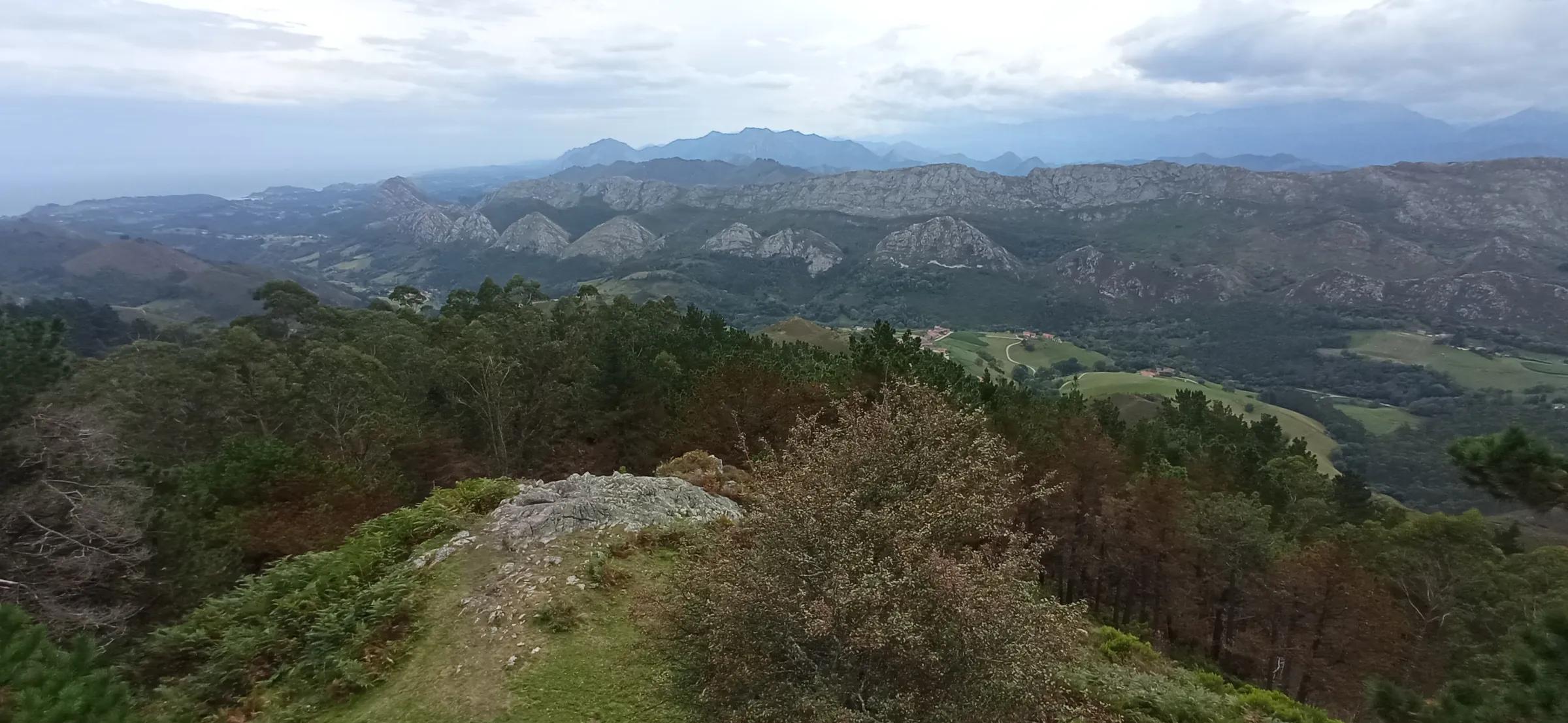
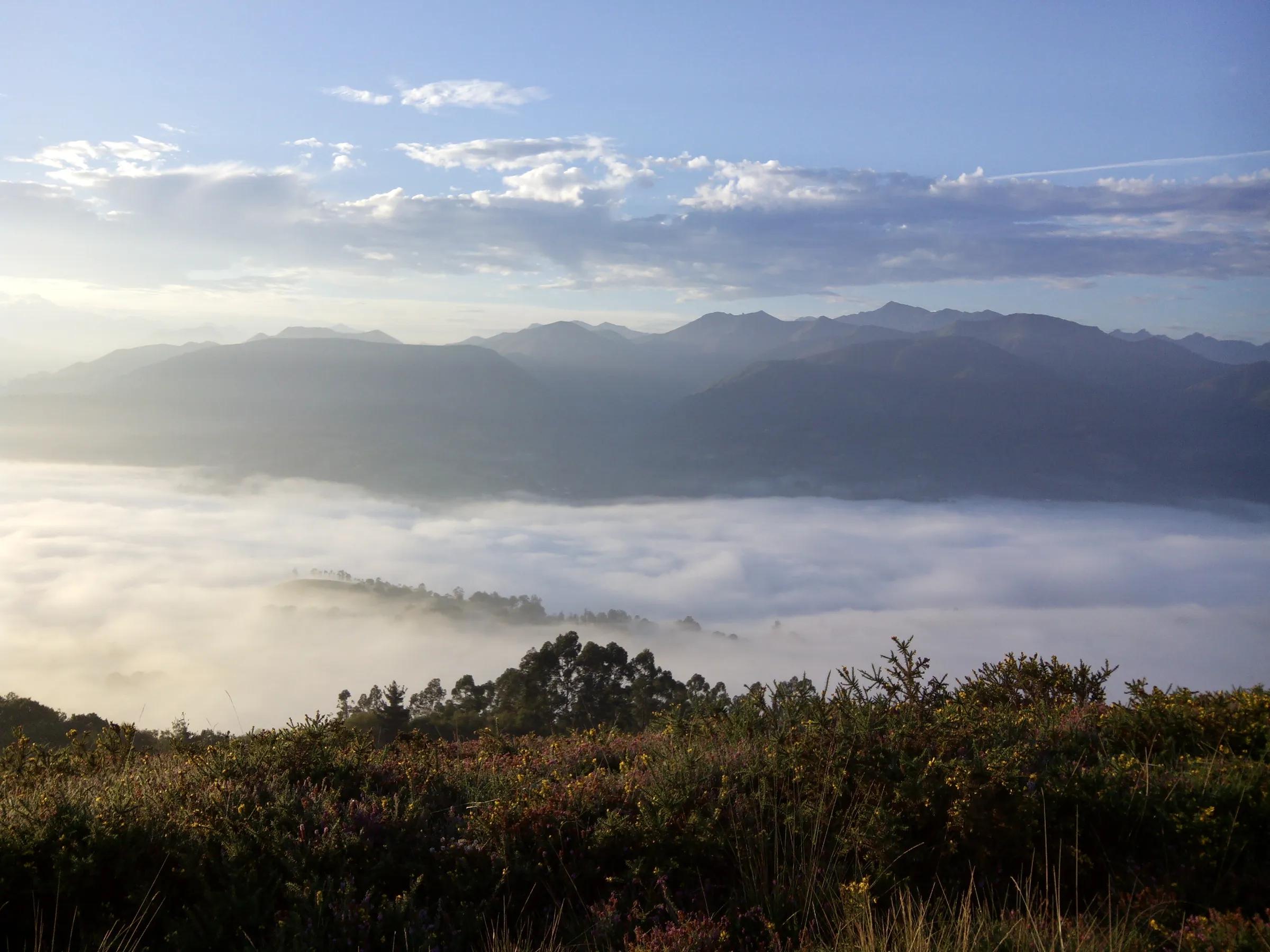
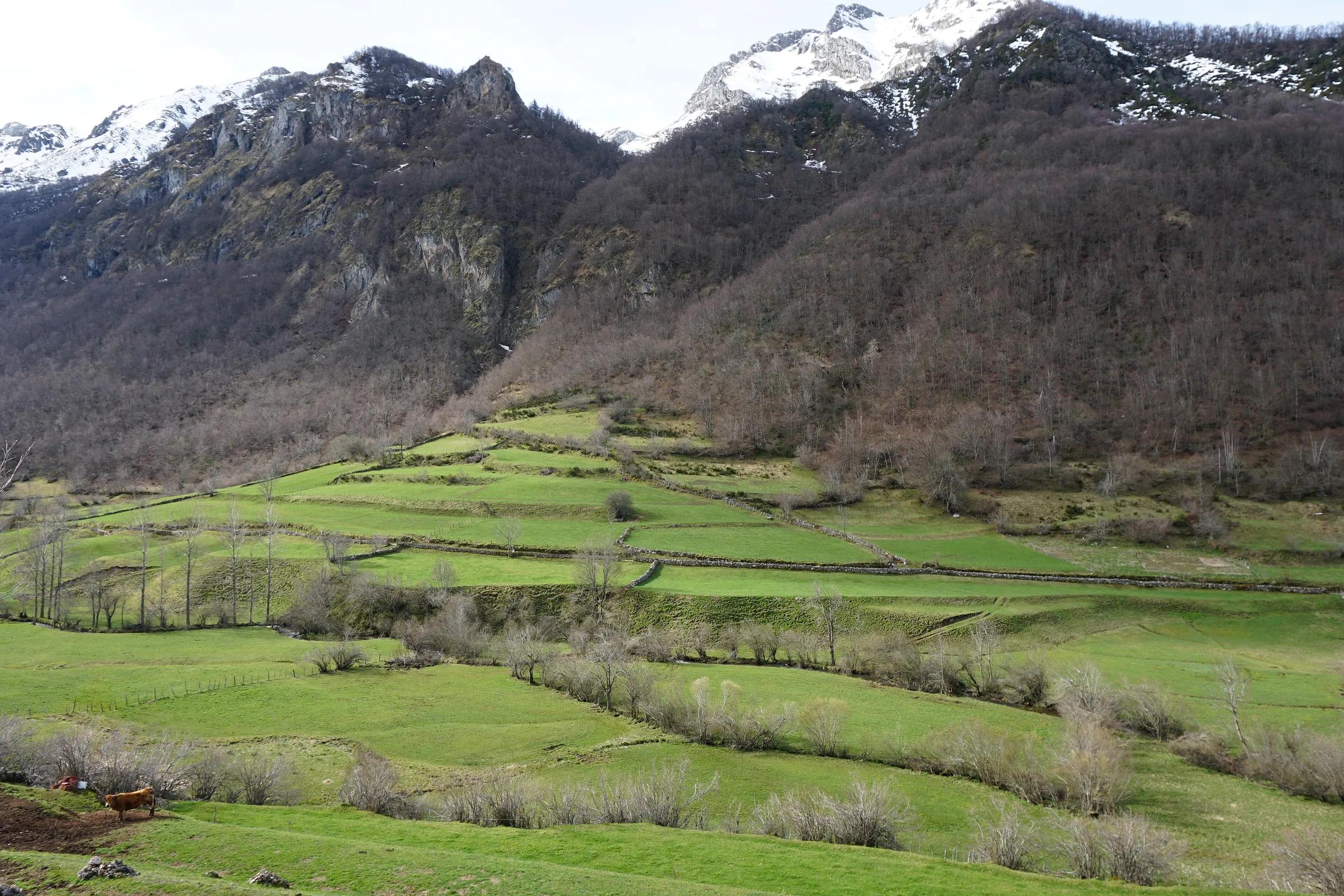
In the mountains of the Cantabrian north, hay meadows lie in small plots on the slopes and valley floors, separated by trees, hedges and stone walls. A habitat study published by Spain's environment ministry gives the whole arrangement a name: the pradería. It is not wilderness. It is a landscape made by people and animals over centuries, and it stays rich only as long as someone keeps working it well.
That is a useful place to begin, because regeneration is easy to say and hard to pin down. This story looks first at what the word means beyond Tierra Luma, using sources that have studied soils and habitats, and only then at what Tierra Luma intends. Everything in the second half is a plan. No land has been bought, so nothing has yet been restored or measured.
Chapter oneA word without a fixed definition
Regenerative agriculture is not a legal category or a certified label. A review by researchers at Wageningen University, published in Global Food Security in 2020, found that different actors understand it differently and that a clear scientific definition is lacking. The authors proposed a provisional one: an approach to farming that uses soil conservation as the entry point, and from there aims to regenerate and contribute to a wider range of ecosystem services.
We find that honest starting point helpful. In these pages, regeneration simply means caring for land so that its soil, water and living things are in better shape over time, not worse, and being able to show it.
Chapter twoSoil, slow to make
Soil is where it starts. The Food and Agriculture Organization of the United Nations describes soil as the basis for plant growth, home to the organisms that break down matter and cycle nutrients, a key part of the water cycle and of the quality of water supplies, and, through its organic matter, a major store of carbon that can act either as a source or a sink. In a 2012 address to the FAO Council, its Director-General put the problem plainly: it can take up to a thousand years to form a single centimetre of soil, and all of it can be lost in a few minutes to degradation and erosion.
Europe has begun to treat this as a matter of law. The European Commission estimates that 60 to 70 per cent of soils in the EU are in an unhealthy state. Its Soil Monitoring Law, which entered into force on 16 December 2025, provides a legal framework to help achieve healthy soils by 2050. It requires Member States to monitor and assess the health of their soils, and sets out to support farmers and other soil managers in improving it.
Chapter threeThe meadow and the hedge
Above the soil, the north of Spain has a particular lesson to teach. The European Environment Agency's biodiversity information system counts grasslands among the most diverse ecosystems in Europe, with as many as 80 plant species in a single square metre. Semi-natural grasslands, it explains, were created or modified by people and are kept alive by regular cutting or extensive grazing; changes in farming and land use have made them disappear at an alarming rate.
Spain's own study of the Cantabrian hay meadows, published by the environment ministry, is more precise still. Farming is indispensable to keeping them, it says, yet the life they hold is threatened by two forces pulling in opposite directions. Where mowing is abandoned, the meadow drifts towards woodland stages that are poorer in species, with a more closed landscape that is more vulnerable to fire. Where it is intensified with mineral fertiliser, slurry and more livestock, only a few very productive species survive and the landscape becomes uniform.
So in Asturias regeneration rarely means fencing land off and walking away. It often means keeping the mosaic: meadows cut at the right time, hedgerows and stone walls kept, woodland given its place, and enough people still living in the valley to do the work.
Chapter fourNative woods
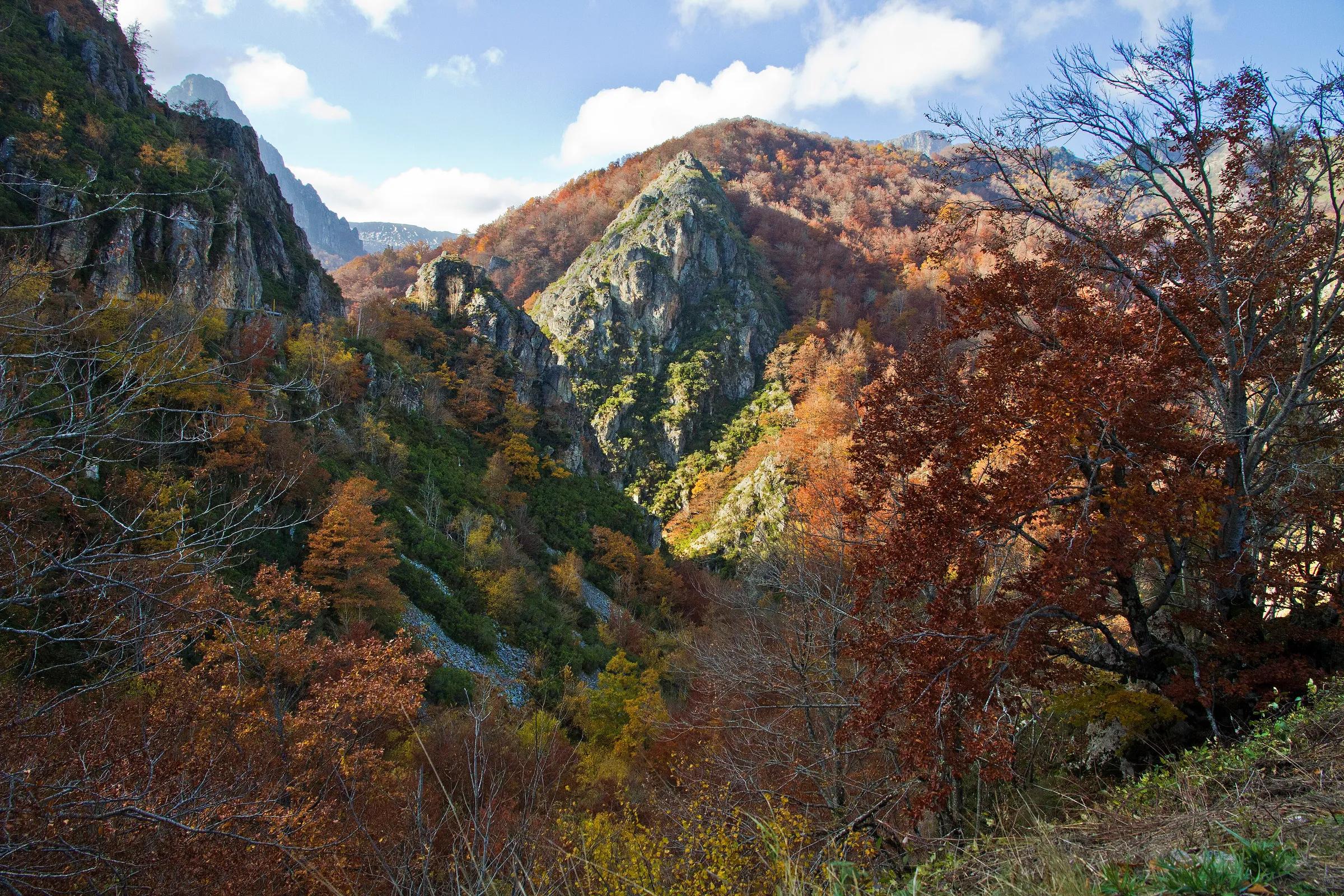
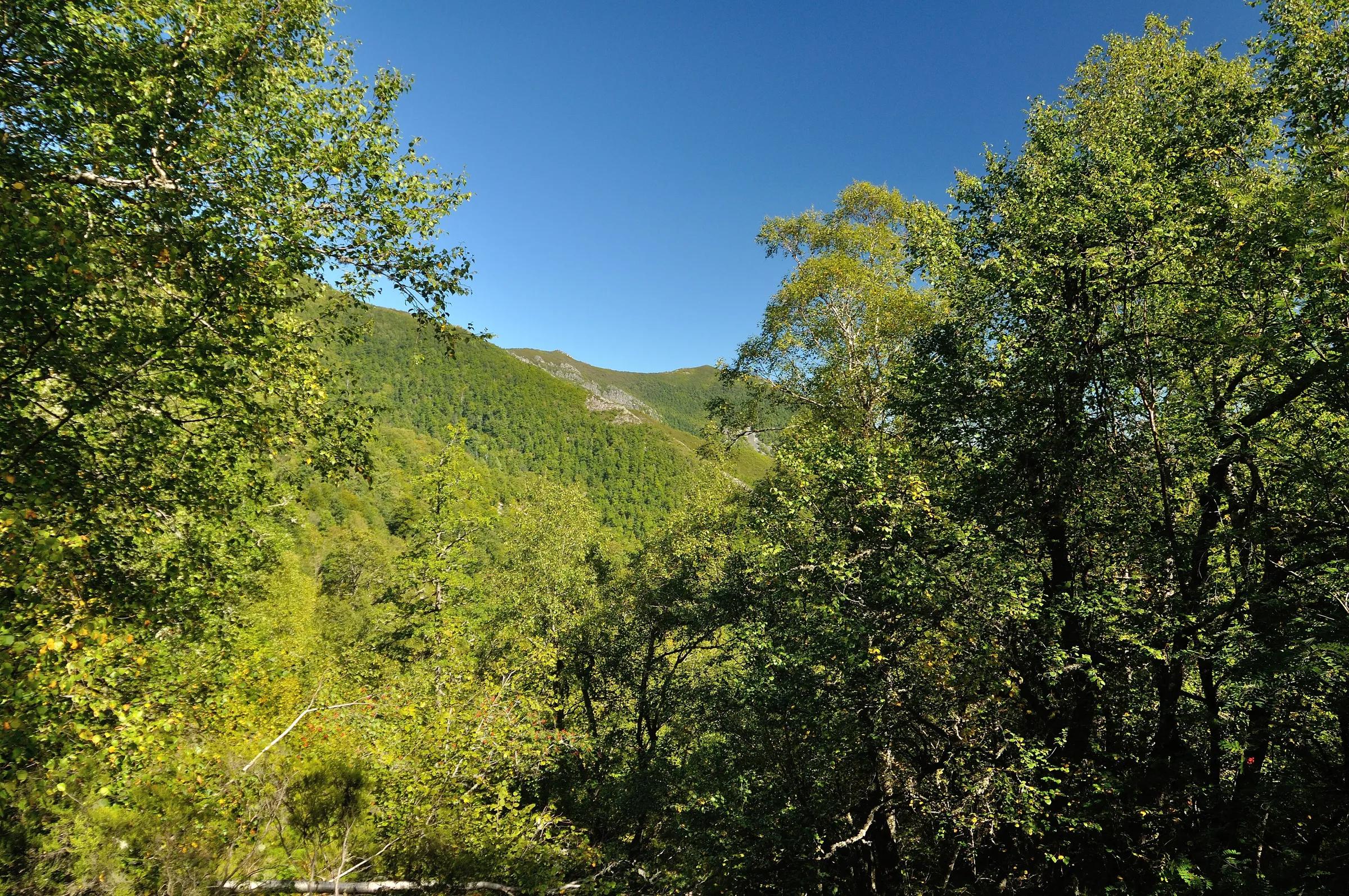
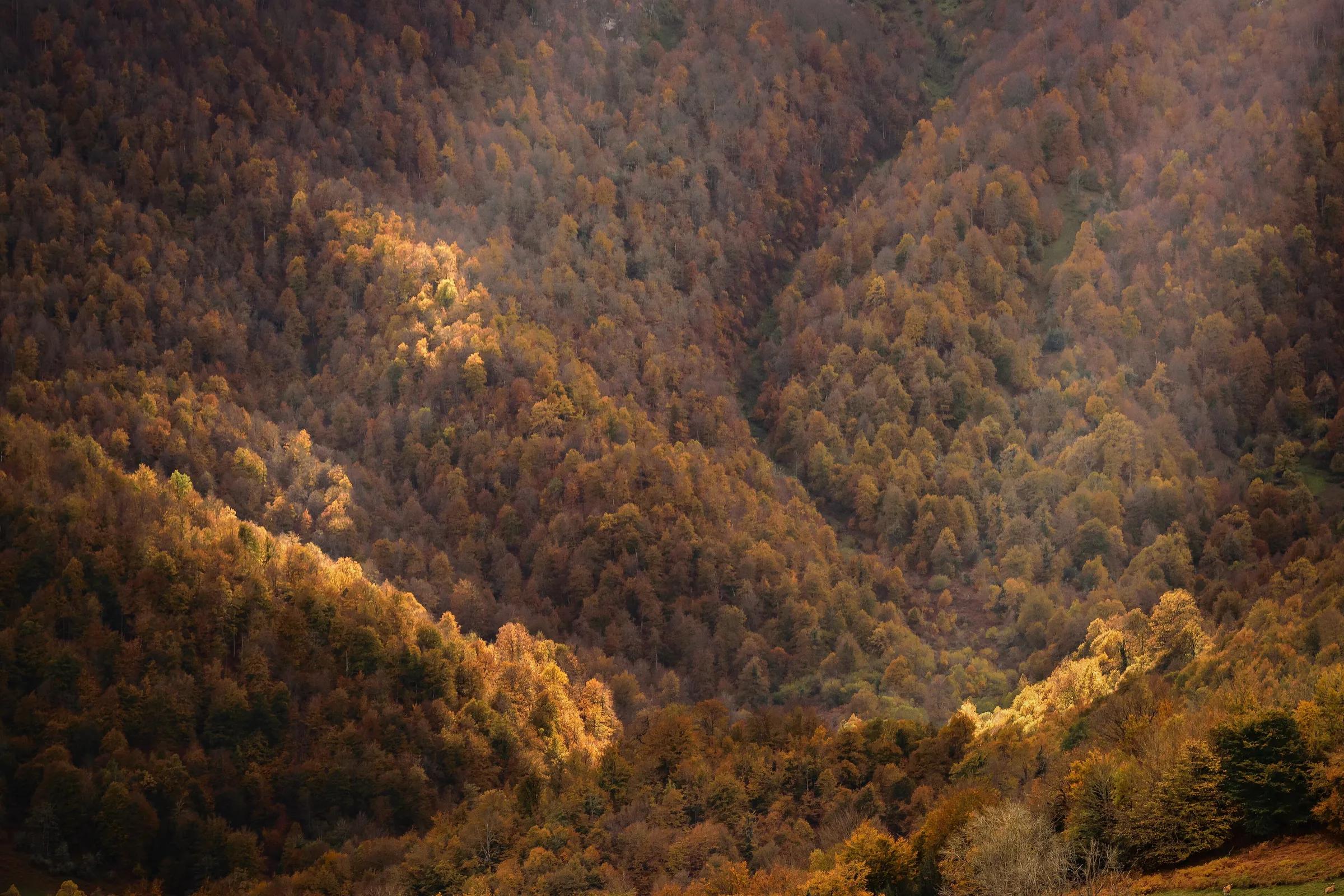
Woodland is the other half of the mosaic. Tierra Luma's plan names its trees carefully, oak, chestnut, beech and hazel, and insists on Asturias's own species and habitats, not an imported idea of wilderness. Its forest element would mean protecting what already grows, planting native trees only where the land needs them, and walking and learning in the woods lightly.
 Javier Pérez / Wikimedia Commons, CC BY-SA 3.0
 Teseum / Wikimedia Commons, CC BY-SA 4.0
 Elfodelbosque / Wikimedia Commons, CC BY-SA 4.0
 Alcoyote89 / Wikimedia Commons, CC BY-SA 4.0
Chapter fiveWhat Tierra Luma intends
Restoring nature is the first of Tierra Luma's five pillars, and the plan's first promise is to restore before building. Once there is land, the order of work would be: survey what already lives there; record a baseline of soils, water, plants and wildlife; then replant native hedgerows and trees, create ponds and wild corners, manage meadows for flowers and insects, and let soils recover, before any new building.
- Soil: cover, compost and grazing practices that build soil instead of using it up.
- Water: kept on the land and used only as far as the law permits; any work near a watercourse needs permission first.
- Food: a food forest, orchards of local apple varieties and kitchen gardens, with no synthetic pesticides.
- Wildlife: dark skies, quiet zones and corridors left wild.
- Buildings: restore what already stands before building anything new, and keep anything new few and small.
Two things would keep this honest. The first is measurement: the plan is to publish methods and results over time, and until there are results, there are no claims. The second is money: once a place runs, part of what its stays, meals and experiences earn is meant to help pay for restoring the land and protecting Asturian forest. How much is not set, and the plan says so.
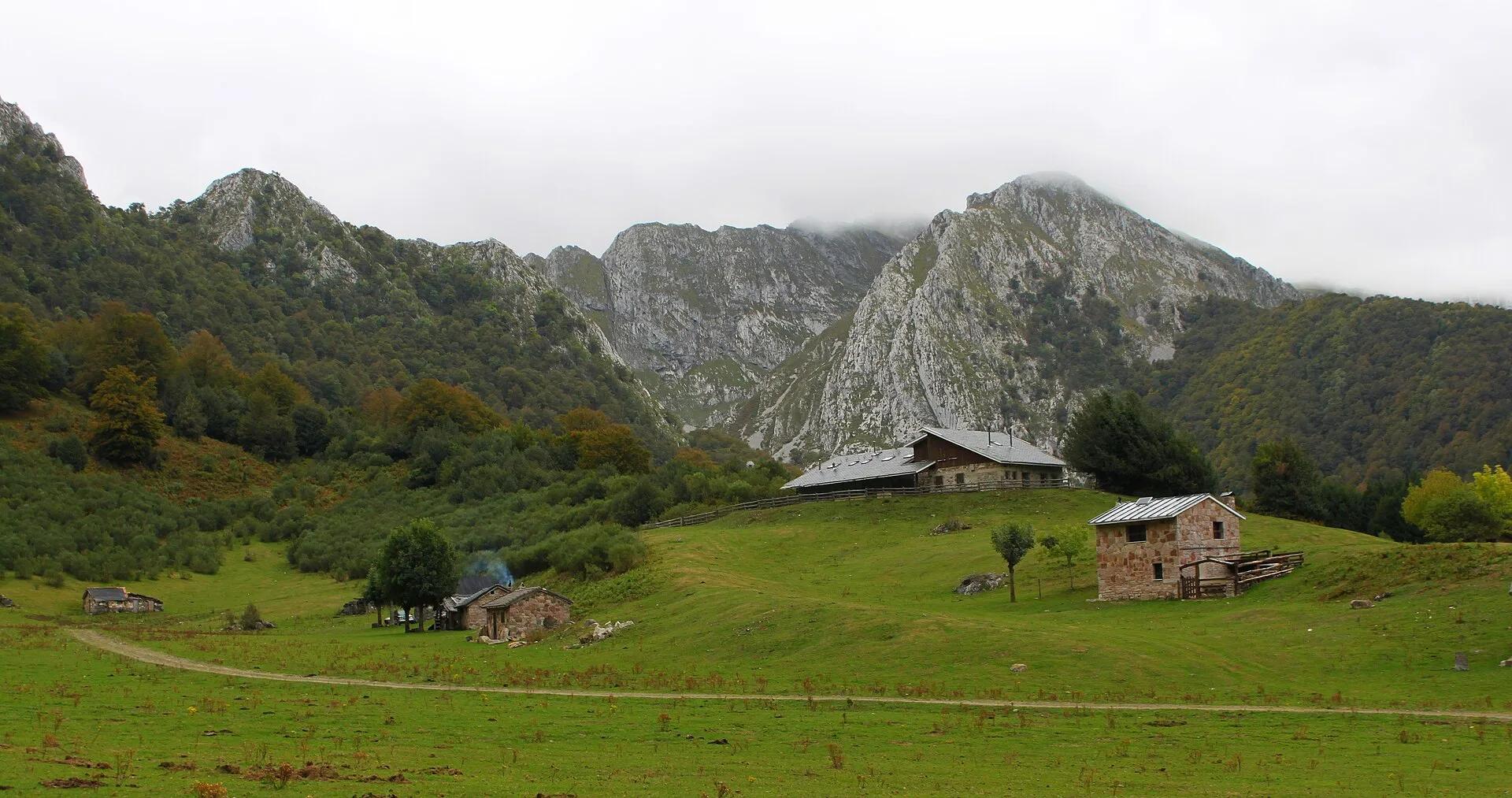
Until then, regeneration is something you can see, not something we can show. Walk the meadows of Somiedo or the beech woods of Redes and you are looking at what careful use of land can sustain. That is the standard the plan sets itself.
Practical details checked on 8 November 2026. Rules, access and seasons change. Check the official sources below before you go.
Sources
- Schreefel et al. (2020), Regenerative agriculture – the soil is the base, Global Food Security 26 (Wageningen University & Research)checked 8 November 2026
- FAO Soils Portal: about soils and their functionschecked 8 November 2026
- FAO Director-General, Securing healthy soils, 145th session of the FAO Council (2012)checked 8 November 2026
- European Commission: Soil Monitoring Lawchecked 8 November 2026
- European Environment Agency, Biodiversity Information System for Europe: Grasslandschecked 8 November 2026
- MITECO, Bases ecológicas preliminares: 6510 Prados de siega de montaña (Arrhenatherion) (2009)checked 8 November 2026
- Tierra Luma: The Vision (Restore & Grow)checked 8 November 2026
Take it further
If this story set you thinking, here is where to take it next.
Series