 Luis Parra Rubio / Wikimedia Commons, CC BY-SA 4.0
Living Differently · Feature
Travelling lightly in northern Spain
The rules of the national park, the courtesy of the pasture and the booked beaches and buses: how to move through the north so it stays as you found it.
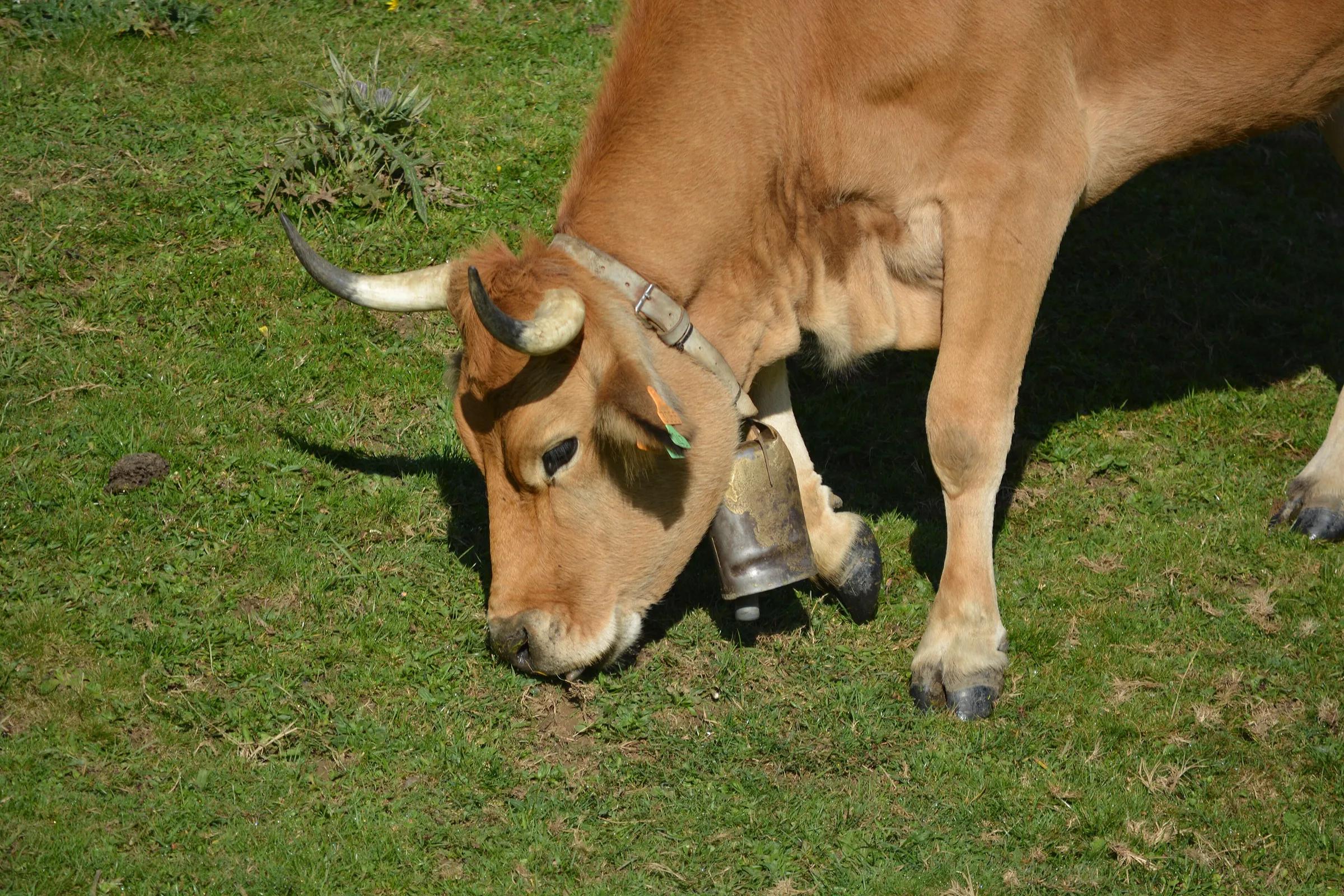
Early on a summer morning, the pasture between lakes Enol and Ercina belongs to the cows. They graze with their backs to the limestone, bells knocking softly, and the only sound louder than theirs is the wind. By midday the same meadow is a car park's walk away for thousands of people. Both scenes are real, and the difference between them is the subject of this piece: how to travel through the north of Spain in a way that leaves the morning version intact. None of it is complicated. Most of it is written down, by the people who look after these places, in rules that are worth reading in full.
Chapter oneGo when the place can breathe
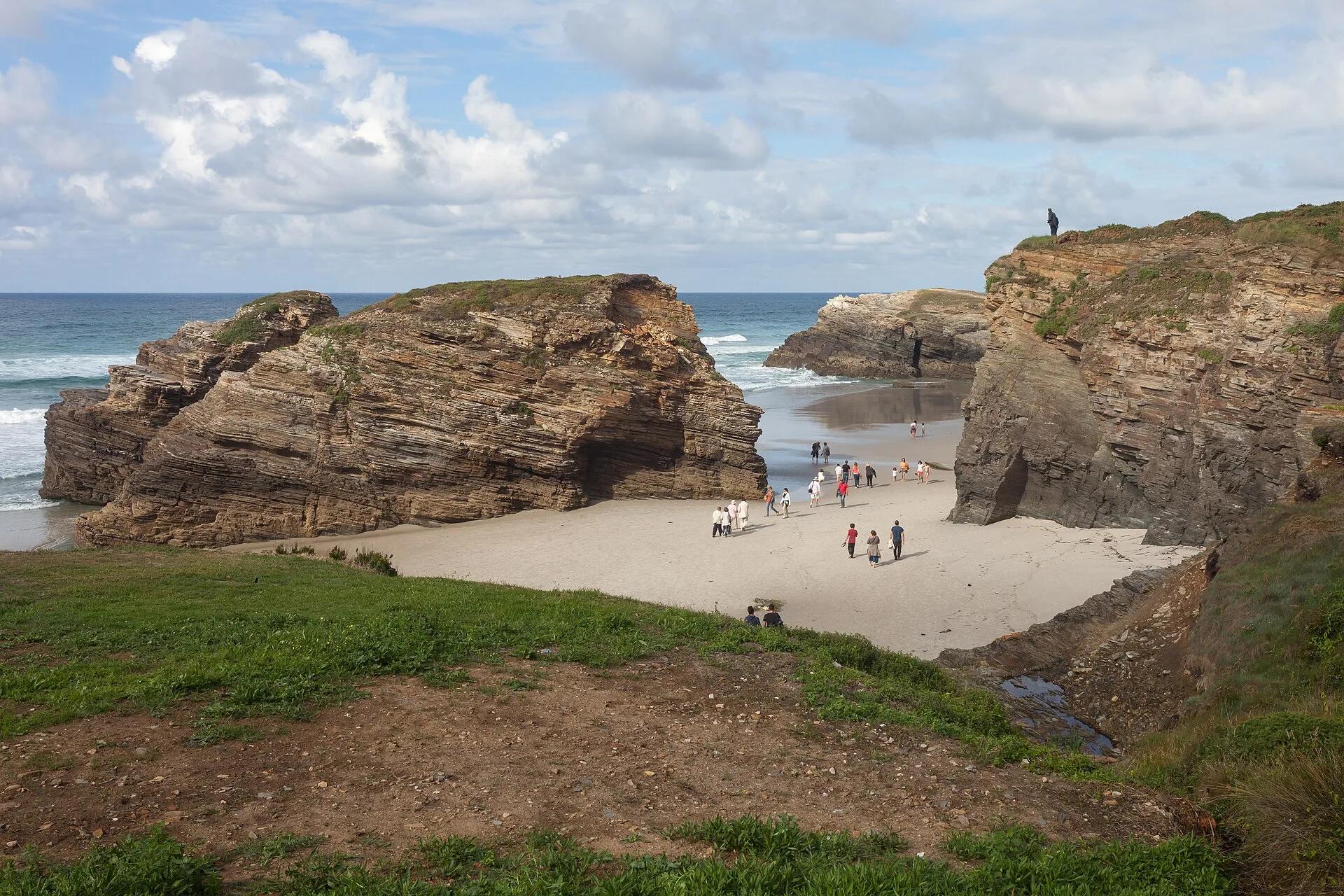
The simplest thing a traveller can do is to arrive when everyone else does not. The north's busiest places are regulated precisely because of crowds. On the days of highest demand, private cars may not drive up to the lakes of Covadonga at all, and visitors go by a special bus. On Praia das Catedrais, the beach in Ribadeo also known as Playa de las Catedrales, you need a free authorisation from the Xunta de Galicia during Holy Week and from July to September. The Romanesque monastery of Santa Cristina de Ribas de Sil, deep in the Ribeira Sacra, now takes visits by booking only, with a compulsory shuttle bus in the busiest weeks.
Travel outside those periods and the same places open up. Spring brings flowers to the pastures and water to the waterfalls; autumn turns the beech woods copper and the vineyards gold. Midweek is calmer than the weekend almost everywhere. Out of season, some services close and some buses stop running, so slower travel asks for a little more planning, and gives back a great deal more room.
Chapter twoThe rules of the high mountain
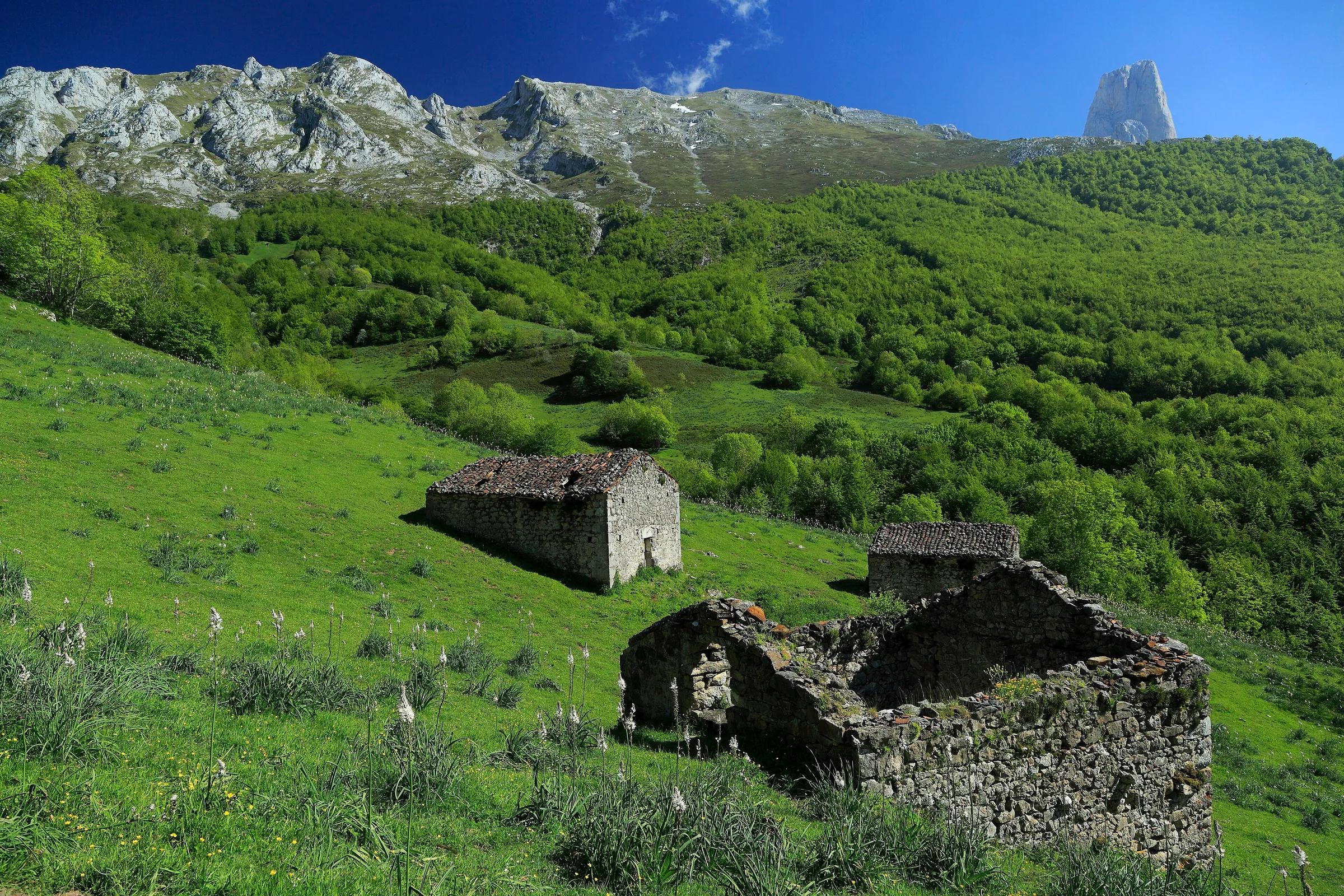
The Picos de Europa National Park spreads across Asturias, Cantabria and León, and its administration publishes clear answers to the questions visitors ask most. Free camping is not allowed: camping is permitted only at authorised campsites. Bivouacking, which the park defines as sleeping in the open without a tent, is only for walkers caught by nightfall on crossings high in the interior of the massifs. A tent may be pitched there only in bad weather or for reasons of force majeure, no earlier than an hour before sunset, and must be struck no later than an hour after sunrise. Organised groups of more than ten may not bivouac without the park's express authorisation, and no one may dig drainage trenches or build stone walls for shelter.
The same page sets out the rest plainly. Lighting fires is strictly prohibited; gas stoves and charcoal barbecues are restricted to the cleared areas of recreation sites. Drones may not fly without the park's authorisation, and neither may kites or balloons. Caves are closed to visitors without express authorisation, and walking on ice is forbidden outright, because a thin crust can break. Bathing in the rivers and lakes is prohibited, collecting plants, animals or rocks is prohibited, and mountain bikes are limited to roads and certain signed tracks, never the Cares path.
Chapter threeSharing the pasture
The high meadows of the north are working land. In summer, cattle, sheep, goats and horses graze them, and many of the paths walkers follow were made by shepherds. The national park asks visitors not to disturb the livestock or the quiet of the place, to respect private property and to close the livestock gates they find on their way. If a gate is open, there may be a reason: the courteous rule, elsewhere as in the park, is to leave every gate as the farmer meant it.
Dogs are where most trouble starts. In the Picos de Europa, dogs and other pets must be on a lead and close to their owners, with the exception of shepherds' dogs working the livestock. On the Cares path extendable leads are banned, and a fixed lead may be no longer than 1.2 metres. Some places do not admit dogs at all: on the inland beach of Gulpiyuri, in Llanes, pets are not allowed on the sand. The park also strongly advises against drinking from springs in low areas or where there is a lot of livestock, as that water is not sanitarily controlled.
Chapter fourFire in a green country
The north looks too green to burn, and that is exactly why fire catches visitors out. Dry spells and southerly winds can turn hillsides of heather and gorse into fuel in a matter of days. In the national park the rule is simple: no fires, and anyone who sees a wildfire should tell the park rangers at once. Everywhere, 112 is the emergency number.
Chapter fiveBooked beaches, regulated roads
A booking can feel like bureaucracy; in practice it is what keeps a fragile place open. At Praia das Catedrais the authorisation is free and requested online from the Xunta's own site, and the beach is only walkable at low tide, so the permit and the tide table are two halves of the same plan. On the lakes of Covadonga, the regulated calendar, timetables and fares are set each year, and tickets are best bought in advance. In Cabrales, the Principado runs a special public transport plan in Holy Week, the May bank holiday and summer, with buses from Arenas de Cabrales towards Poncebos, where parking is scarce.
 Luis Miguel Bugallo Sánchez (Lmbuga) / Wikimedia Commons, CC BY-SA 3.0
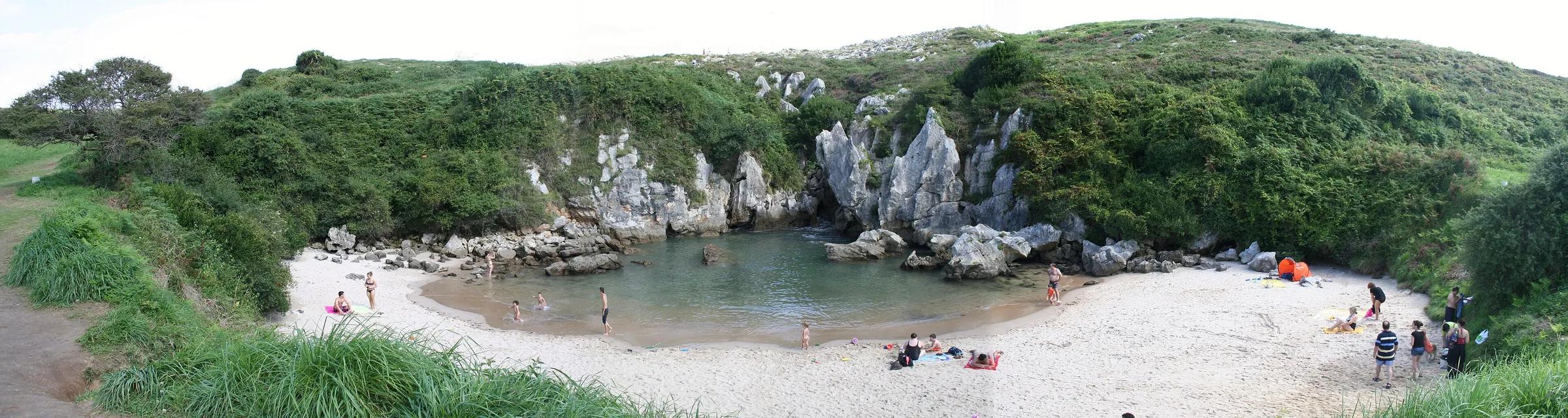 Franciaio / Wikimedia Commons, CC BY-SA 3.0
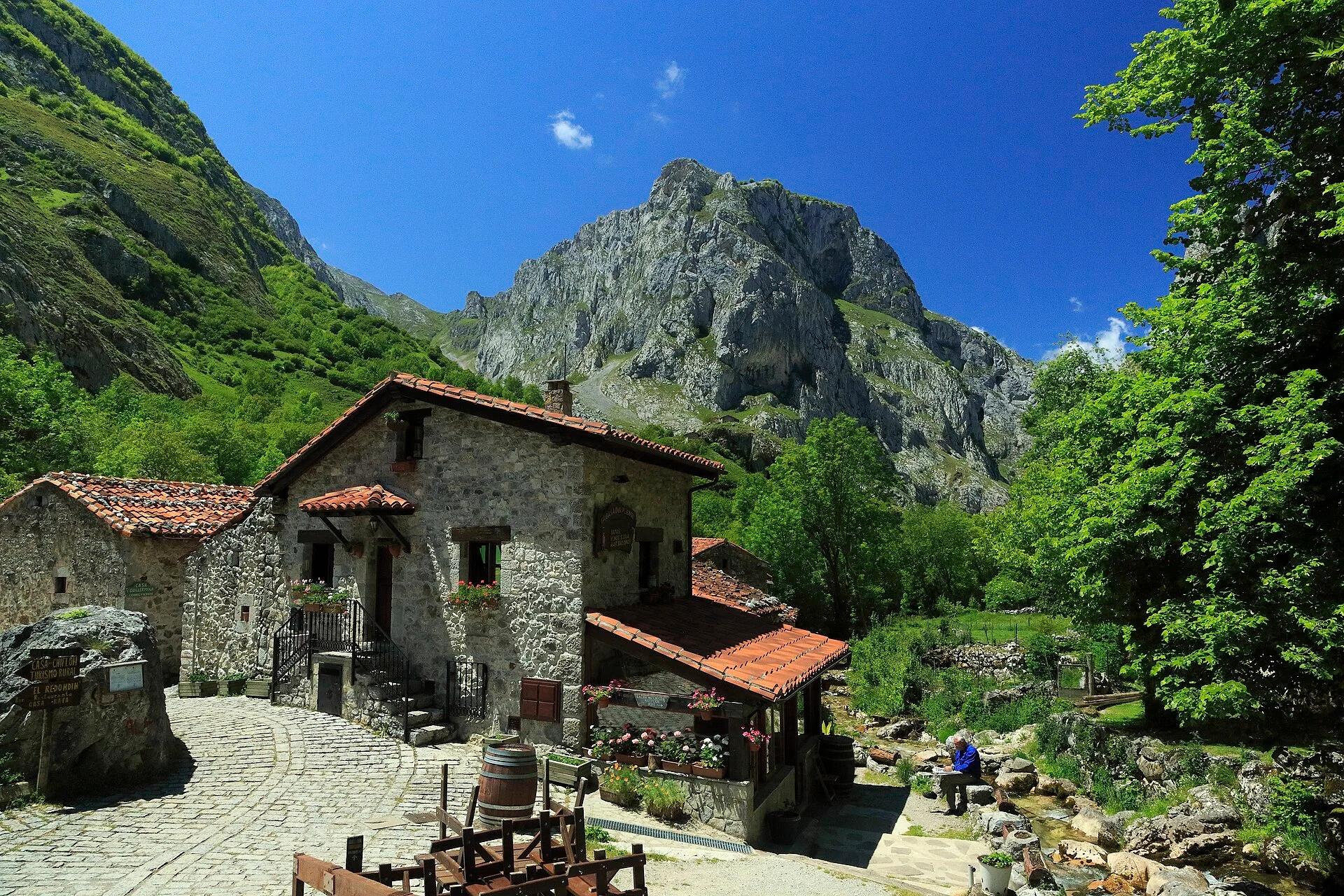 Falk2 / Wikimedia Commons, CC BY-SA 4.0
Chapter sixLeaving the car behind
Doing without a car entirely takes patience in the rural north, but leaving it parked for a day is often easy, and it is usually the better choice. The bus to the lakes runs from Cangas de Onís and from car parks along the road; the summer buses in Cabrales spare the narrow road to Poncebos; in the Ribeira Sacra a shuttle replaces private cars at Santa Cristina in high season. Between towns, look at the regional buses and trains before you assume you need the car, and check their current timetables with the operators, because services change with the season. Build a trip around them and you will see more of the road, and spend less time looking for somewhere to stop.
Chapter sevenAs you found it
The last rule is the oldest. The national park asks visitors to keep it clean and forbids leaving waste anywhere but in bins and containers; Turismo Asturias asks walkers on the path to Bulnes to carry out all their rubbish, food scraps included, because orange peel and apple cores do not belong in a mountain meadow. Stay on marked paths, keep voices low near livestock and wildlife, and buy from the villages you pass through. None of this asks much. Together, it is the difference between a place that is visited and a place that is used up.
These are also the habits that shape Tierra Luma, which for now is a plan for a small regenerative village in eastern Asturias, not a place: no land has been bought and nothing has been built. Whatever grows there one day would have to sit within these same mountains and these same rules.
Practical details checked on 8 November 2026. Rules, access and seasons change. Check the official sources below before you go.
Sources
- Parque Nacional de los Picos de Europa: Prepara tu visita (preguntas frecuentes y normas)(in Spanish)checked 8 November 2026
- Parque Nacional de los Picos de Europa: precauciones en senderos y rutas de montañachecked 8 November 2026
- MITECO: Regulación de accesos a los lagos de Covadongachecked 8 November 2026
- Turismo Asturias: Acceso a los Lagos de Covadongachecked 8 November 2026
- Turismo de Galicia: Praia das Catedraischecked 8 November 2026
- Turismo Asturias: Bulnes por la Canal del Texuchecked 8 November 2026
- Turismo Asturias: Playa de Gulpiyurichecked 8 November 2026
- Turismo Ribeira Sacra: Día 2, ruta de los monasterios (Santa Cristina)checked 8 November 2026
- BOPA núm. 105 (30 May 2024): Ley del Principado de Asturias 4/2024 on forest fires (daily IRIF 0–5; suspension of fire permissions at very high or extreme risk)checked 8 November 2026
- Junta de Castilla y León: authorisation for fixed barbecues in recreation areas in the Época de Peligro Altochecked 8 November 2026
- Xunta de Galicia: Medio Rural extends the 2026 high-danger season to 31 October (14 Oct 2026)checked 8 November 2026
- BOE: Plan Rector de Uso y Gestión del Parque Nacional de los Picos de Europa (2002, annulled by the Supreme Court in 2005; background only)
Take it further
If this story set you thinking, here is where to take it next.