
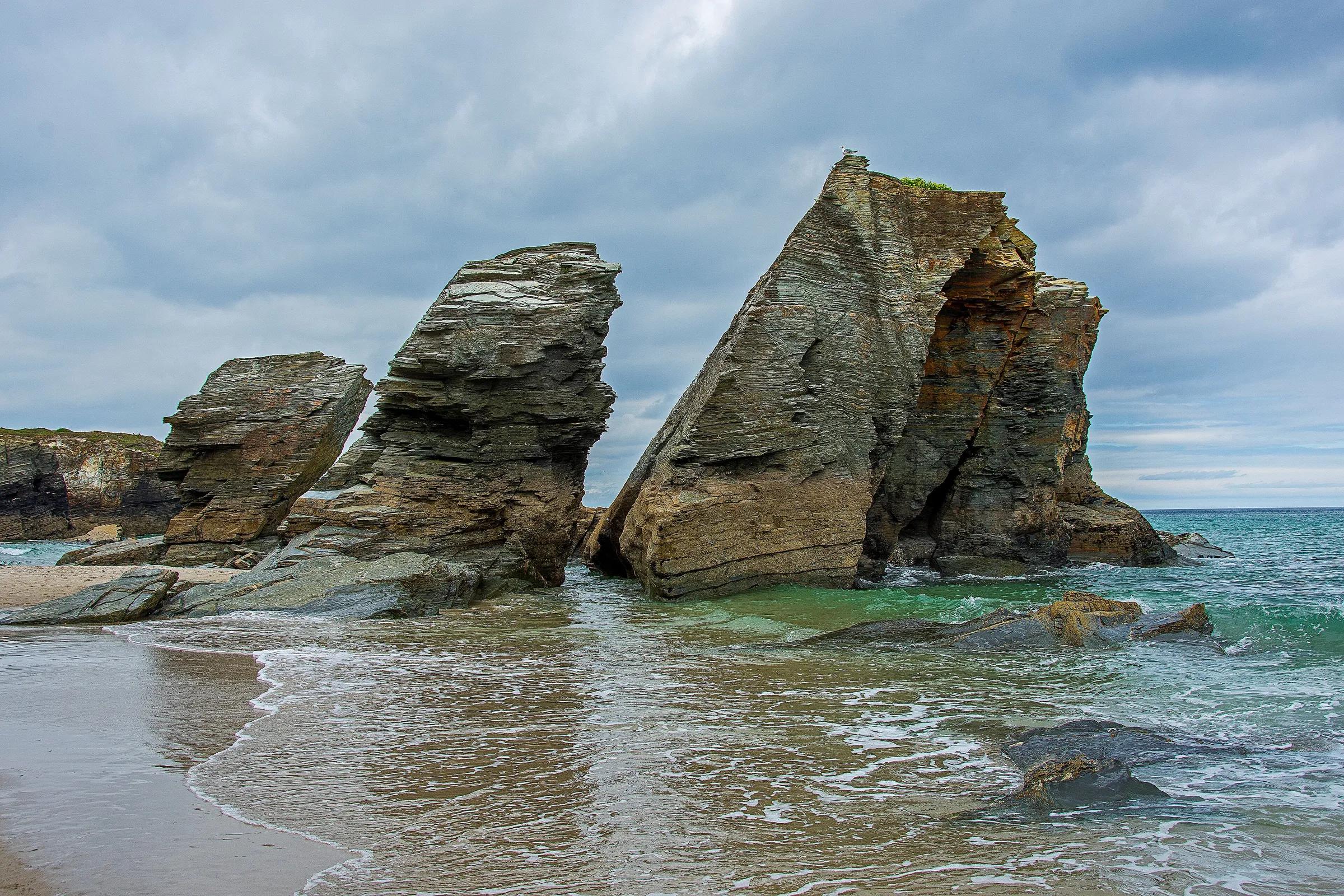
 Anual / Wikimedia Commons, CC BY-SA 4.0
Destination journal
Praia das Catedrais: tides and booking
Slate arches thirty metres high that the sea gives back for a few hours each day. How the tide shapes a visit, how the Xunta's free booking works, and the A Mariña coast around it.
5 min read· By the Tierra Luma editors
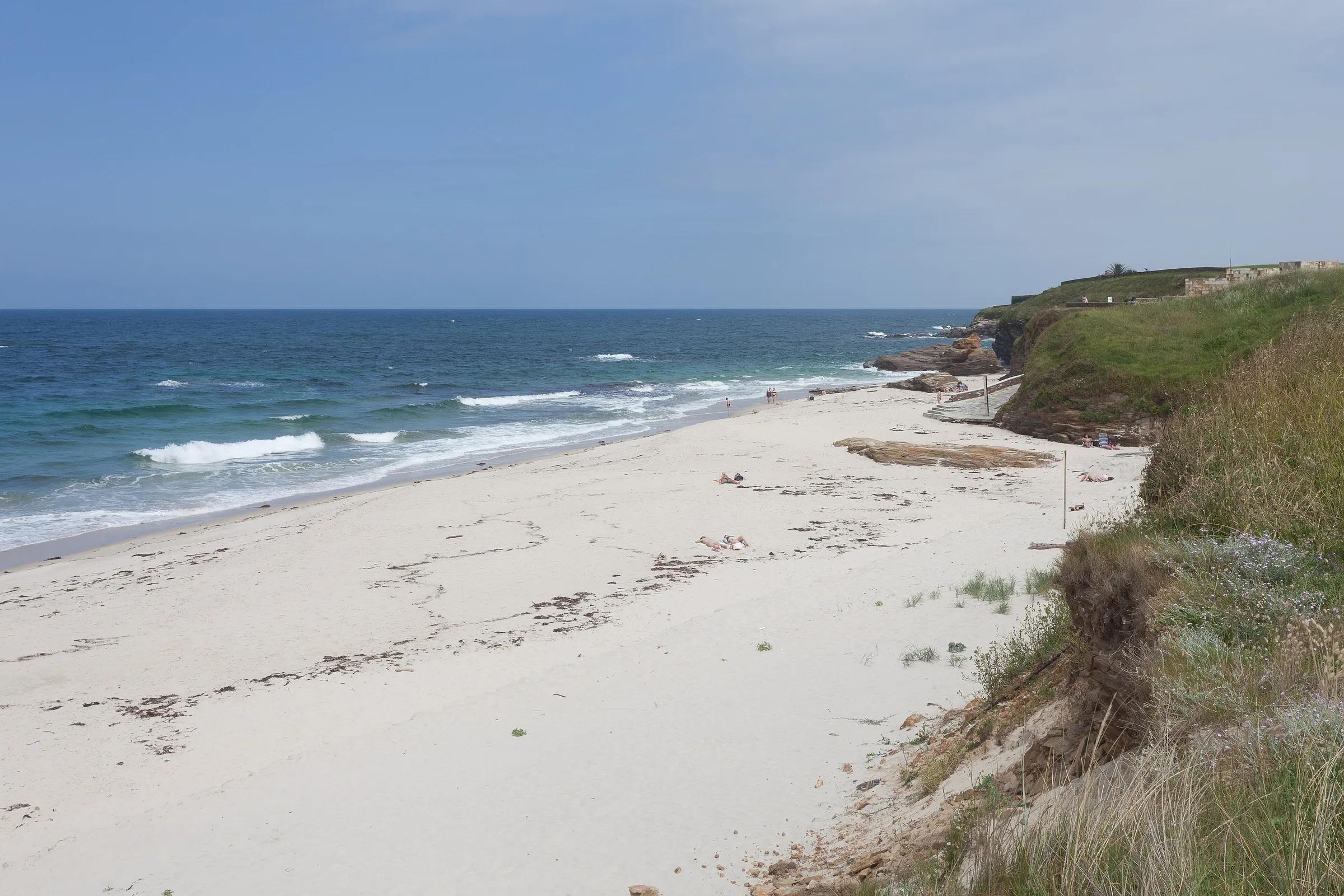
At high water there is almost nothing to see: a line of cliffs, the sea working at their foot, a few dark shapes standing in the swell. Come back six hours later and the same coast has become a nave. The tide has drawn off a floor of pale sand, and across it rise buttresses and arches of slate, some of them thirty metres high, with passages and caves running between them. Praia das Catedrais, the beach of the cathedrals, is a place that exists in full only for part of each day.
Known in Spanish as the Playa de las Catedrales, it lies in the municipality of Ribadeo, on the eastern part of the coast of Lugo called A Mariña. It is a Natural Monument protected by the Xunta de Galicia, and in the busiest months access to the sand is by free authorisation. This guide explains the tide, the booking system as we found it in November 2026, and the coast around it.
Highlights
The places in this story
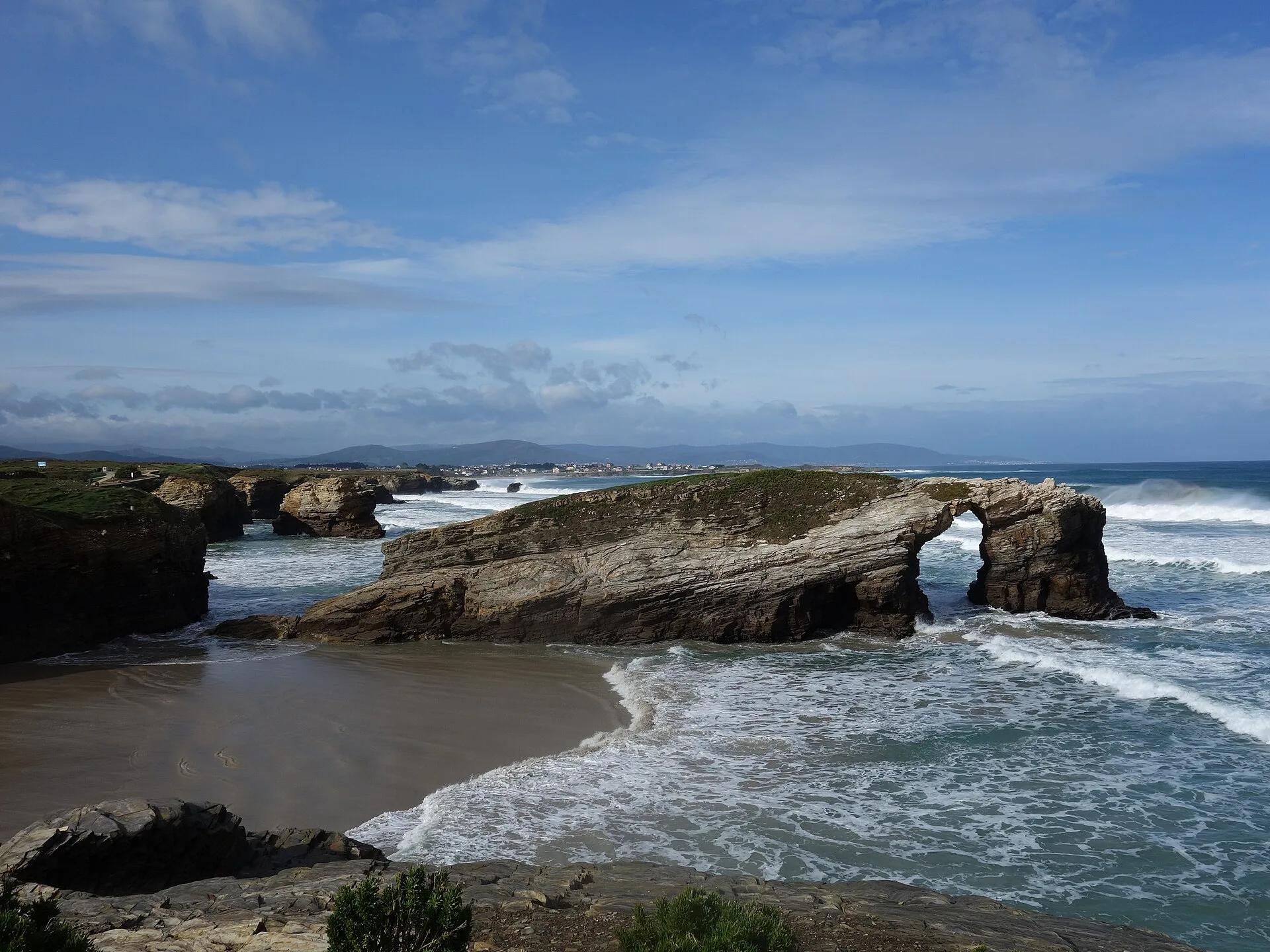
A place that exists in full only for part of each day.
Chapter oneWhy go
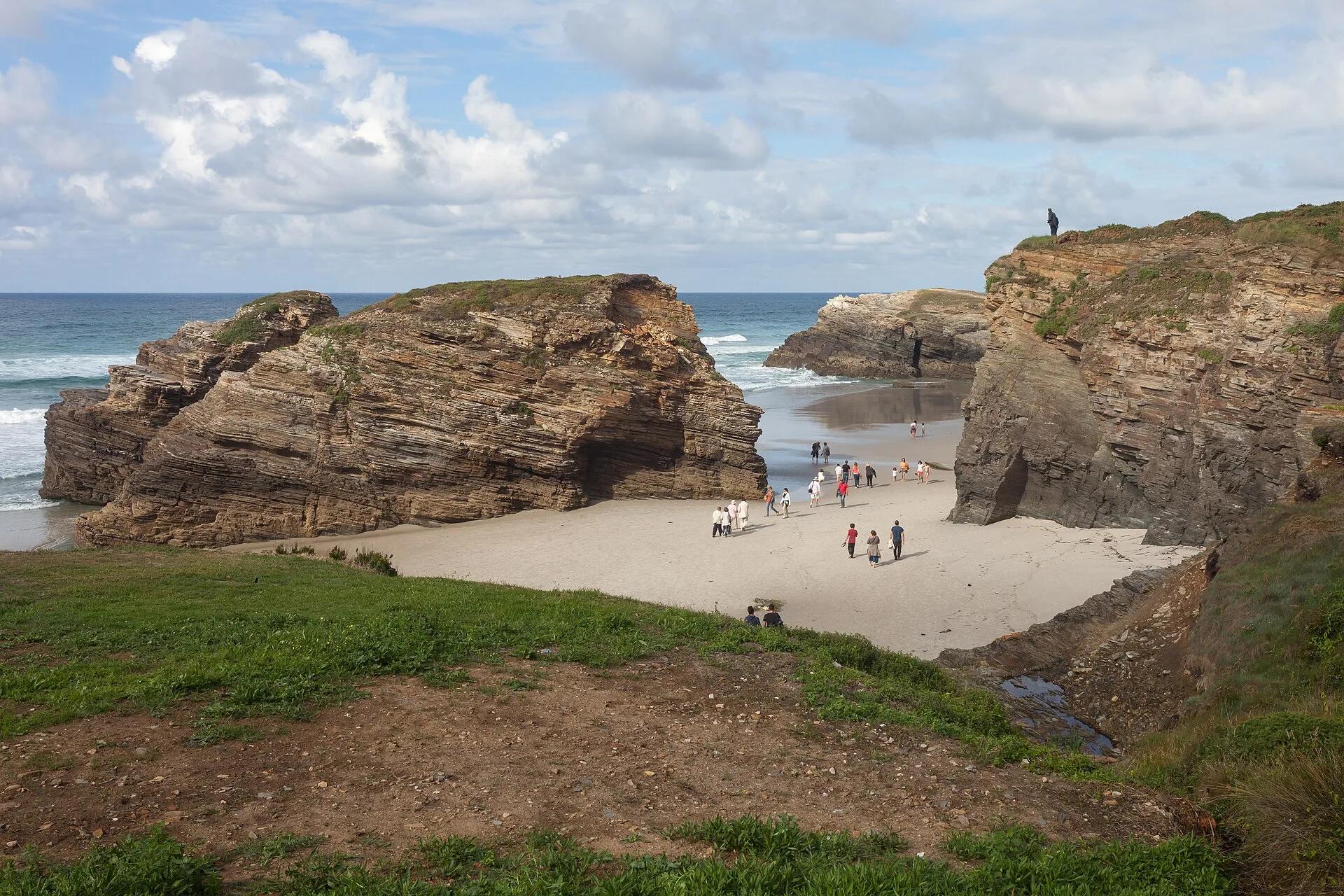
Turismo de Galicia describes walls of slate and flying buttresses thirty metres high, shaped by the sea. The beach is really two, the arenales of Augasantas and Carricelas, within a protected stretch of coast that the Natura 2000 network extends for about fifteen kilometres between Barreiros and Ribadeo. The Natural Monument itself covers just under 29 hectares, twenty of them sea. Walking under the arches at low tide, barefoot on wet sand, is the experience; Turismo de Galicia recommends taking off your shoes.
Chapter twoReading the tide
Everything here turns on the tide. The Xunta's own answers to frequent questions explain that the tides vary a great deal and that at high water the sea covers the whole beach for several hours. Its advice is to go down to the sand in the window from two hours before to two hours after low tide, and to plan your visit with a tide table; the booking website also shows the tides when you choose your date.
Not every low tide is equal. Spring tides, around full and new moon, uncover far more of the beach than neap tides, and the best days open the deepest passages between the arches. Even on a modest tide, the clifftop above the beach has paths and viewpoints from which to watch the sea come and go.
Chapter threeBooking: how it works
In the periods of heaviest use, the Xunta asks everyone who goes down to the sand to carry a free access authorisation. When we checked its official booking site on 8 November 2026, it stated that reservation is required at Easter and from 1 July to 30 September, and that the authorisation and the guided tours organised by the Xunta are free. Outside those periods access is open, though the monument's rules and recommendations still apply.
The Xunta's frequently asked questions add the details. You can book at most thirty days before the visit. One person can request authorisation for a group of up to twenty-five, but must give the details of everyone in it, including name, year of birth and identity document, except for children under fourteen, who need no document. A booking is valid only for the day it was issued and only for the person named on it. There is a permanent check at the entrance to the beach, and you may be asked to show your authorisation at any time.
Chapter fourGetting there
The beach is on the coast west of the town of Ribadeo, beyond the village of Rinlo. The Xunta says there are three car parks at different distances from the monument, the farthest less than a kilometre from the entrance. The upper part of the monument has paths and viewpoints suitable for people with reduced mobility; the sand itself can only be reached by stairs, and walking on it means walking on soft sand.
Dogs are not allowed on the beach at Easter or from 15 May to 15 September under the municipal by-law the Xunta quotes, though they may use the signed paths around it on a lead. Swimming is allowed, but follow the flags and the lifeguards.
Chapter fiveSafety on the sand
Chapter sixSeasons
Summer brings the best weather and the most people, with authorisation required; Easter is busy too. Late spring and early autumn, outside the booking periods, can be the gentlest time to come, with open access and long evenings. In winter the beach is free to visit and often almost empty, but Atlantic storms make the lower beach dangerous, and some of the most dramatic days are best watched from above.
Chapter sevenThe A Mariña coast nearby
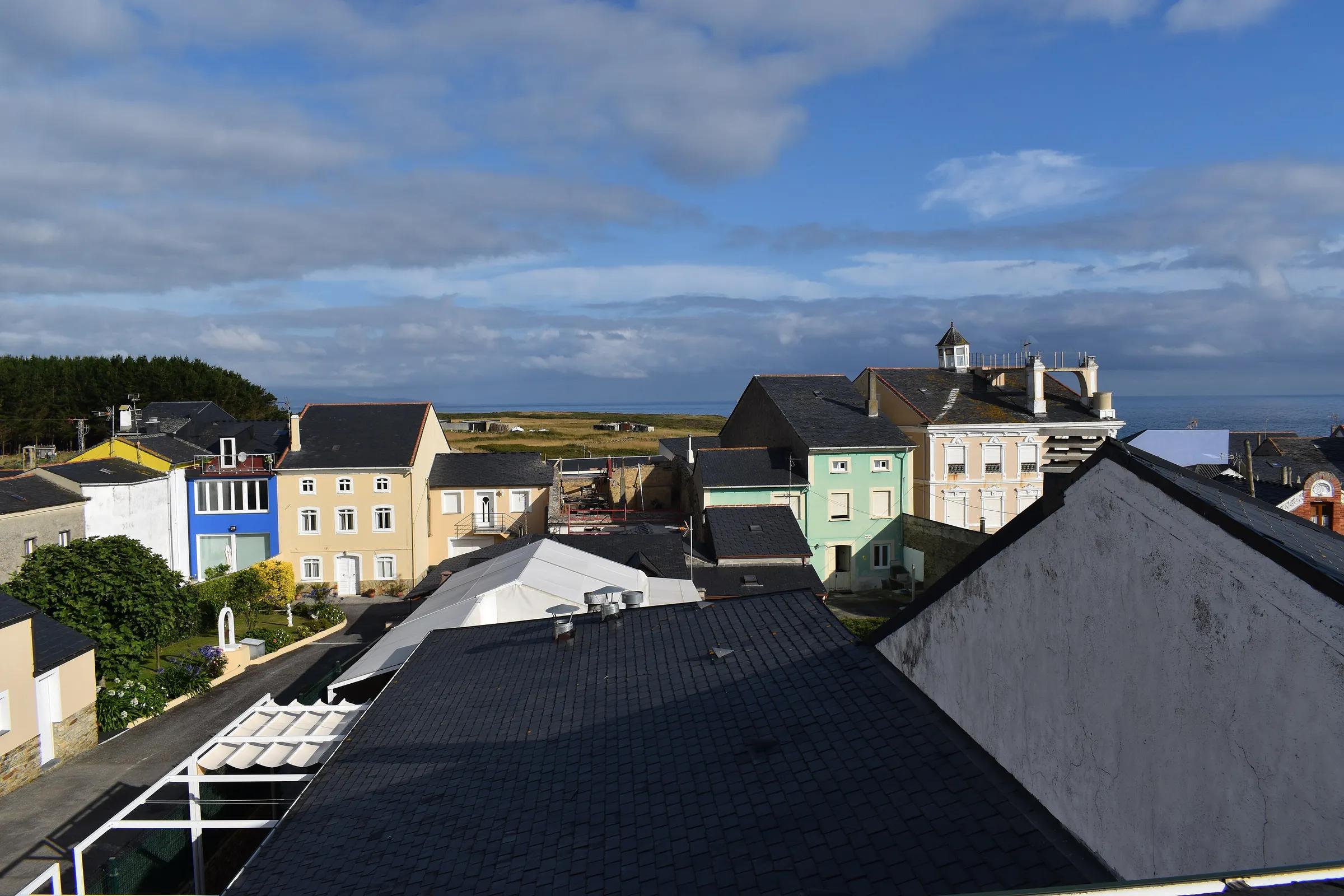
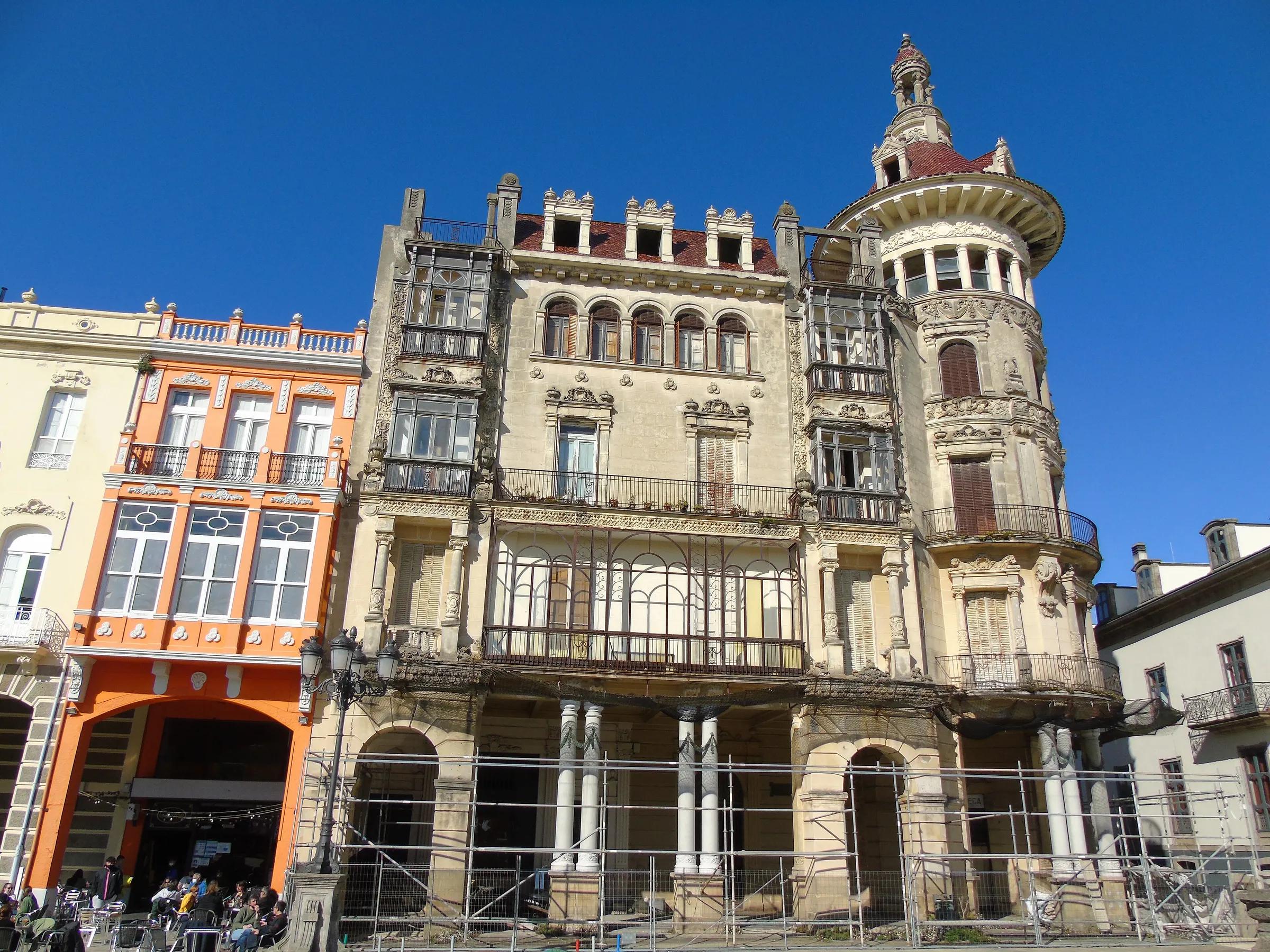
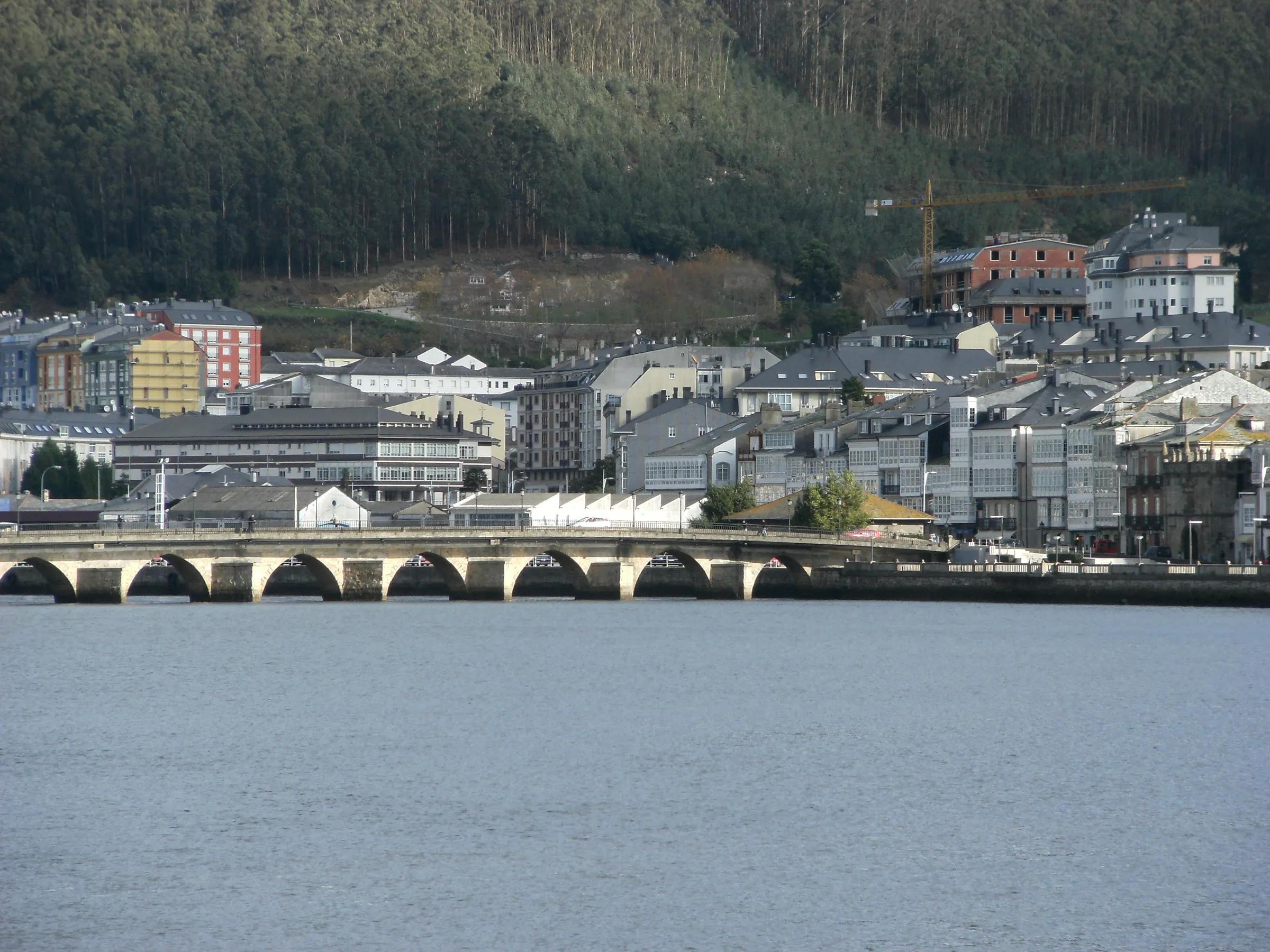
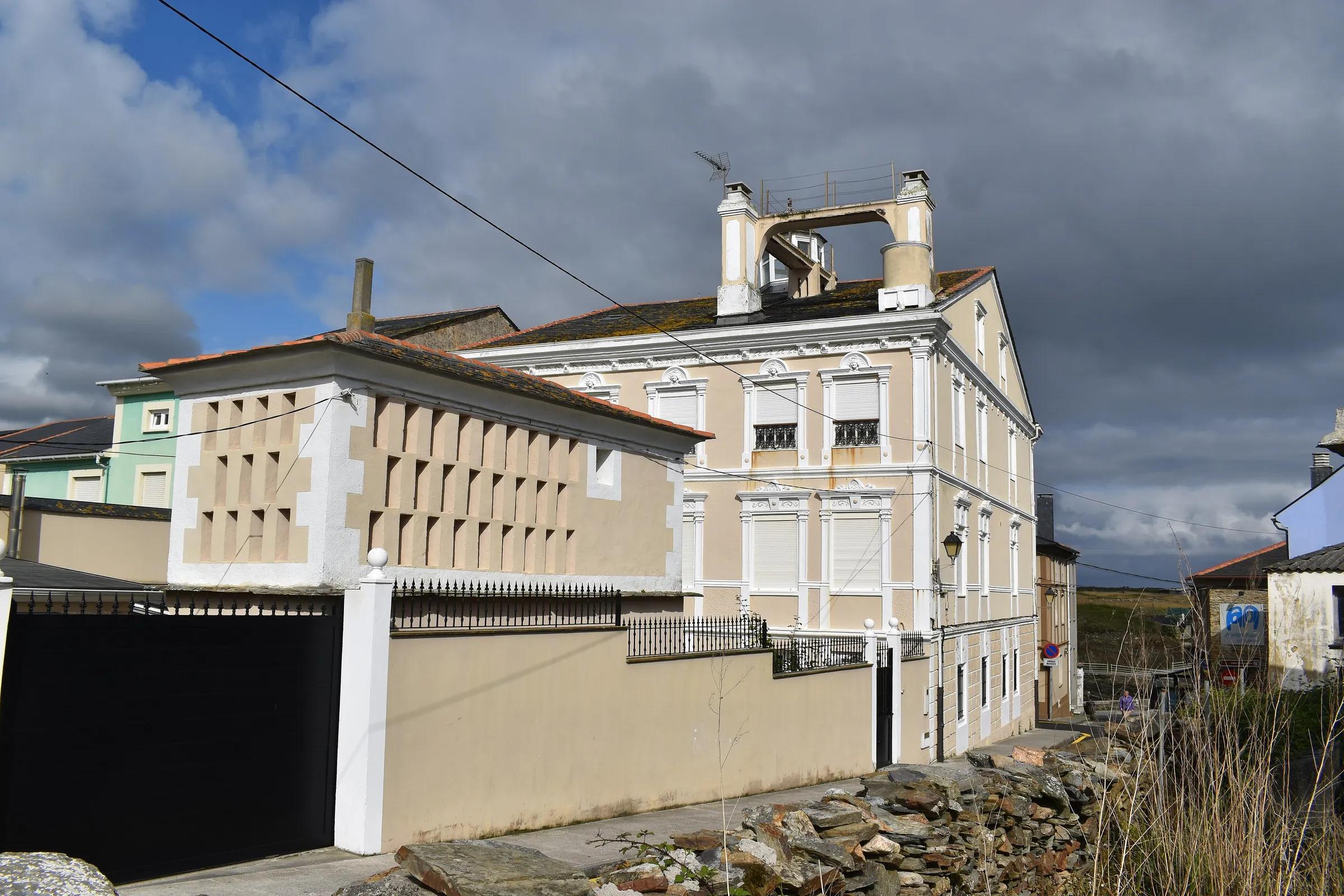
Ribadeo, at the mouth of the Eo, faces Asturias across the estuary. Turismo de Galicia ties its singular architecture to emigration to the Americas and names the Torre dos Moreno, from 1915, as one of its finest expressions; following the coast, a short detour leads to the old lighthouse of Illa Pancha, built in 1857. Between the town and the beach lies Rinlo, which the same source counts among the most distinctive villages of the Galician coast, its houses perched above the sea and packed close together against the storms; Turismo de Galicia also names the small port of Rinlo and the beach of Os Castros as neighbours of As Catedrais. Further west, the ría of Foz is lined, it says, with almost fifteen kilometres of fine white sand, and its marshes hold one of the largest colonies of seabirds in north-west Spain; nearby stands the basilica of San Martiño de Mondoñedo, which Turismo de Galicia calls Spain's oldest cathedral. Viveiro, on its own ría, closes the stretch.
 Lmbuga (Luis Miguel Bugallo Sánchez) / Wikimedia Commons, CC BY-SA 4.0
 Enrique Pernas / Wikimedia Commons, CC BY-SA 2.0
Nearby
Nearby, if you have time
Practical details checked on 8 November 2026. Rules, access and seasons change. Check the official sources below before you go.
Sources
- Xunta de Galicia — Praia das Catedrais access authorisation (official booking site)checked 8 November 2026
- Xunta de Galicia — Preguntas frecuentes As Catedrais (2025)checked 8 November 2026
- Turismo de Galicia — Praia das Catedraischecked 8 November 2026
- Turismo de Galicia — De Ribadeo ao Pico da Frouxeira (Torre dos Moreno, Illa Pancha, Rinlo, As Catedrais)checked 8 November 2026
- Turismo de Galicia — Ría de Fozchecked 8 November 2026
Take it further
If this story set you thinking, here is where to take it next.
Series
In the series The seven provinces around
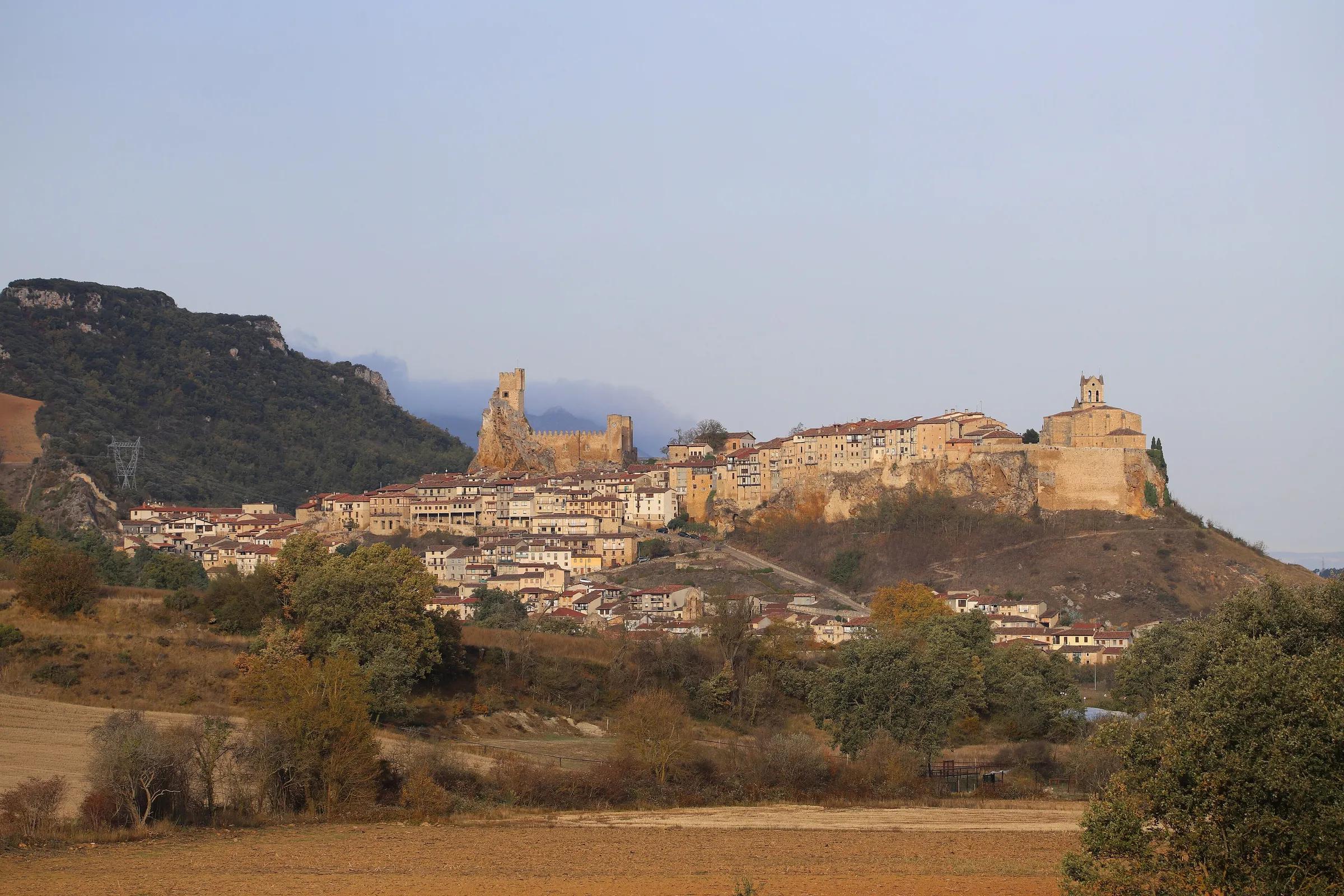
Journeys & Road Trips
From the Montaña Palentina to Las Merindades
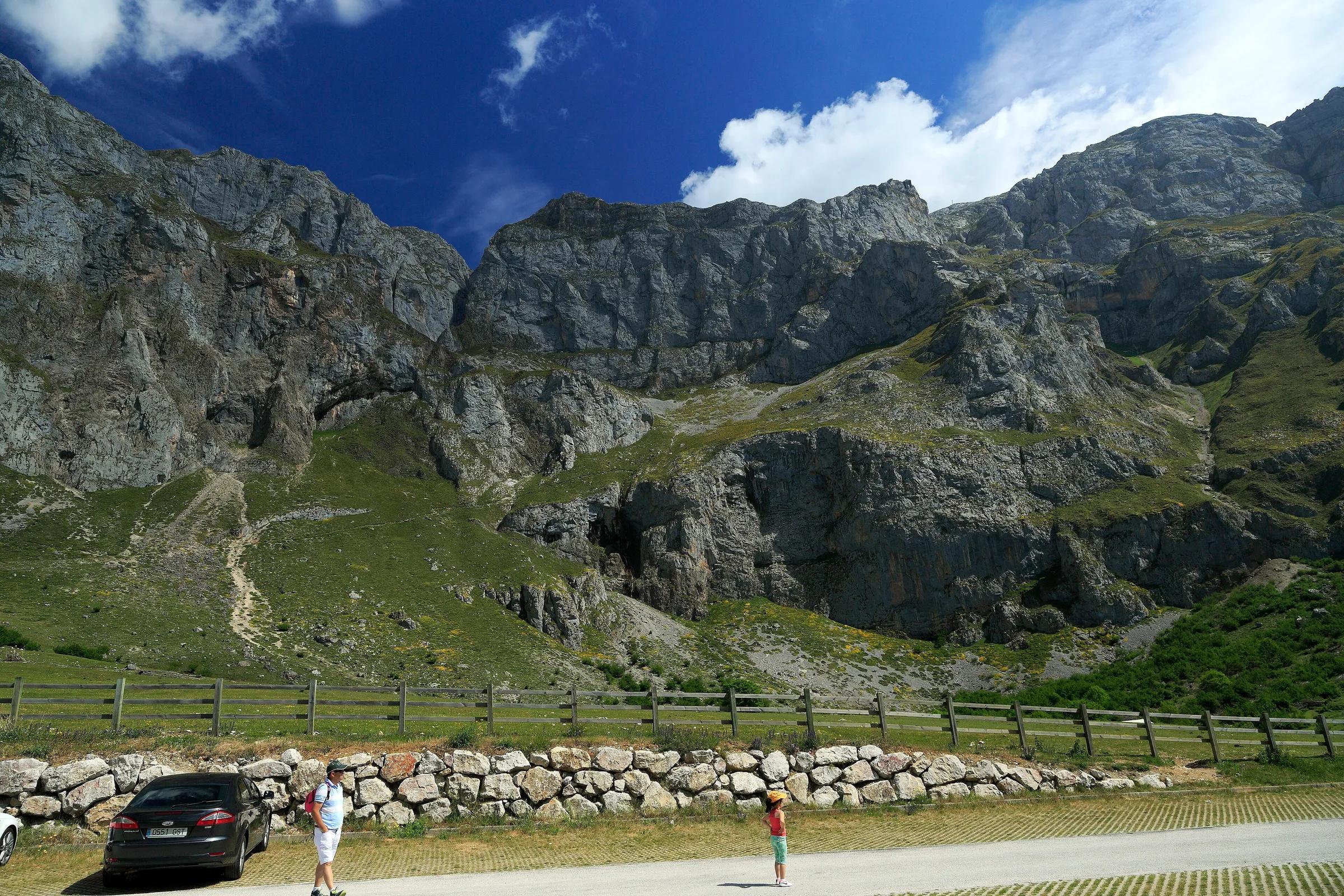
Adventure & Outdoors
Fuente Dé and the high Picos
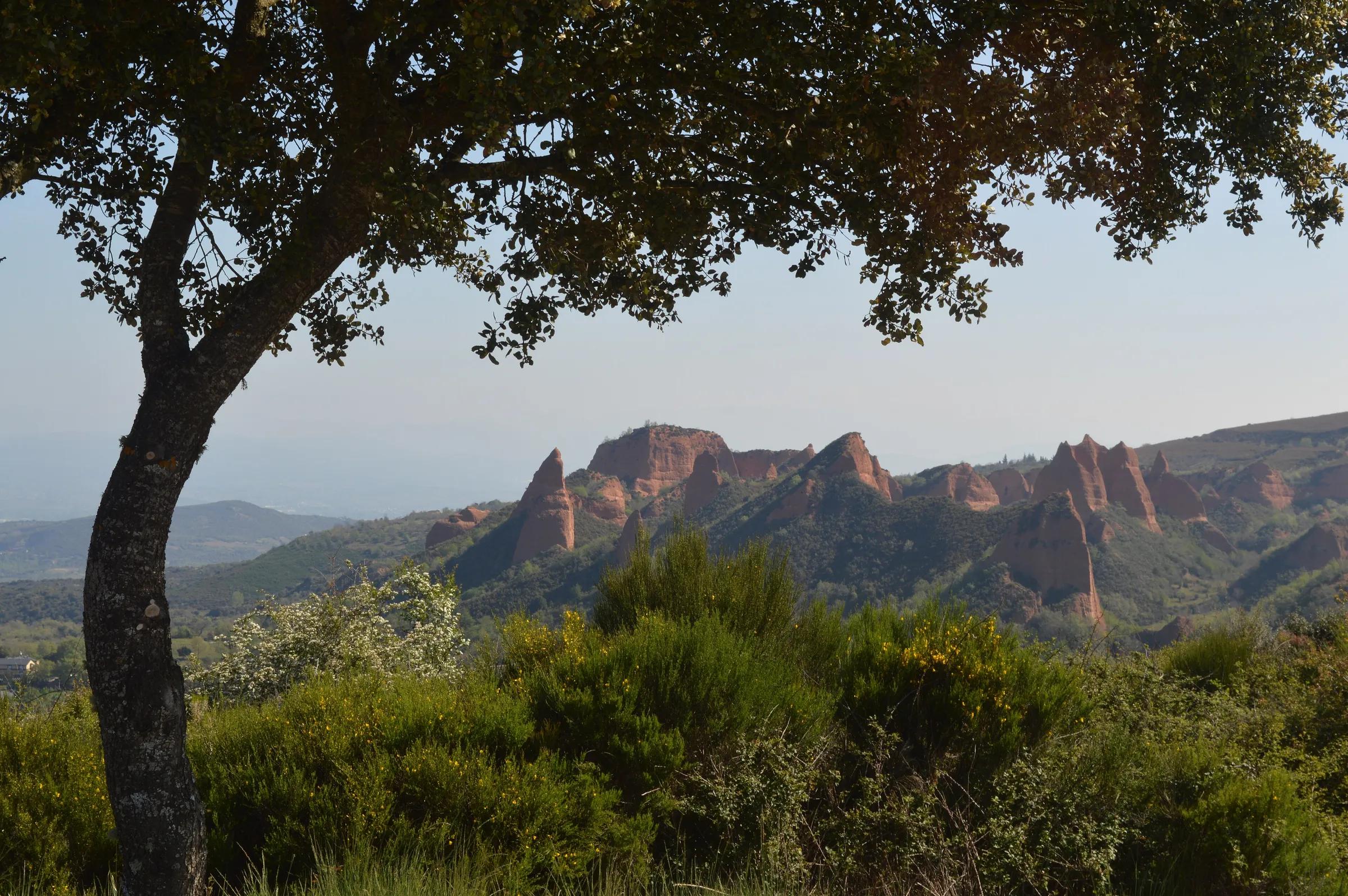
Life & Culture
Las Médulas: the mountains the Romans brought down
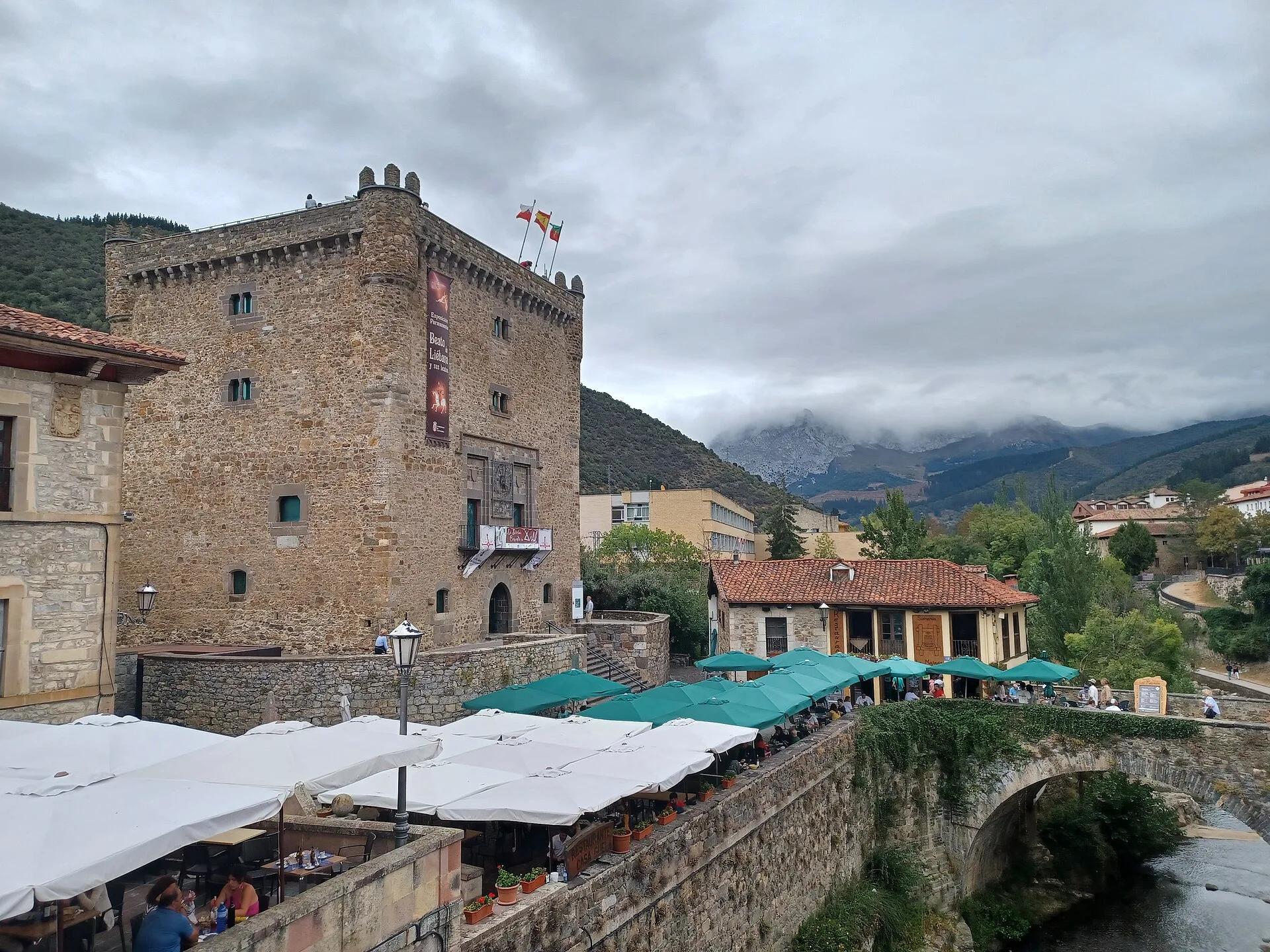
Places & Destinations
Potes and the Liébana valley
Places & Destinations
Praia das Catedrais: tides and booking
Journeys & Road Trips
The Ribeira Sacra and the Sil canyon