
 Photo: Rahico / Wikimedia Commons, CC BY-SA 4.0
Journeys & Road Trips · Road trip
The Ribeira Sacra and the Sil canyon
Three days along two rivers in Ourense and Lugo: terraced vineyards, Romanesque monasteries in the chestnut woods, and the hot springs of Ourense.
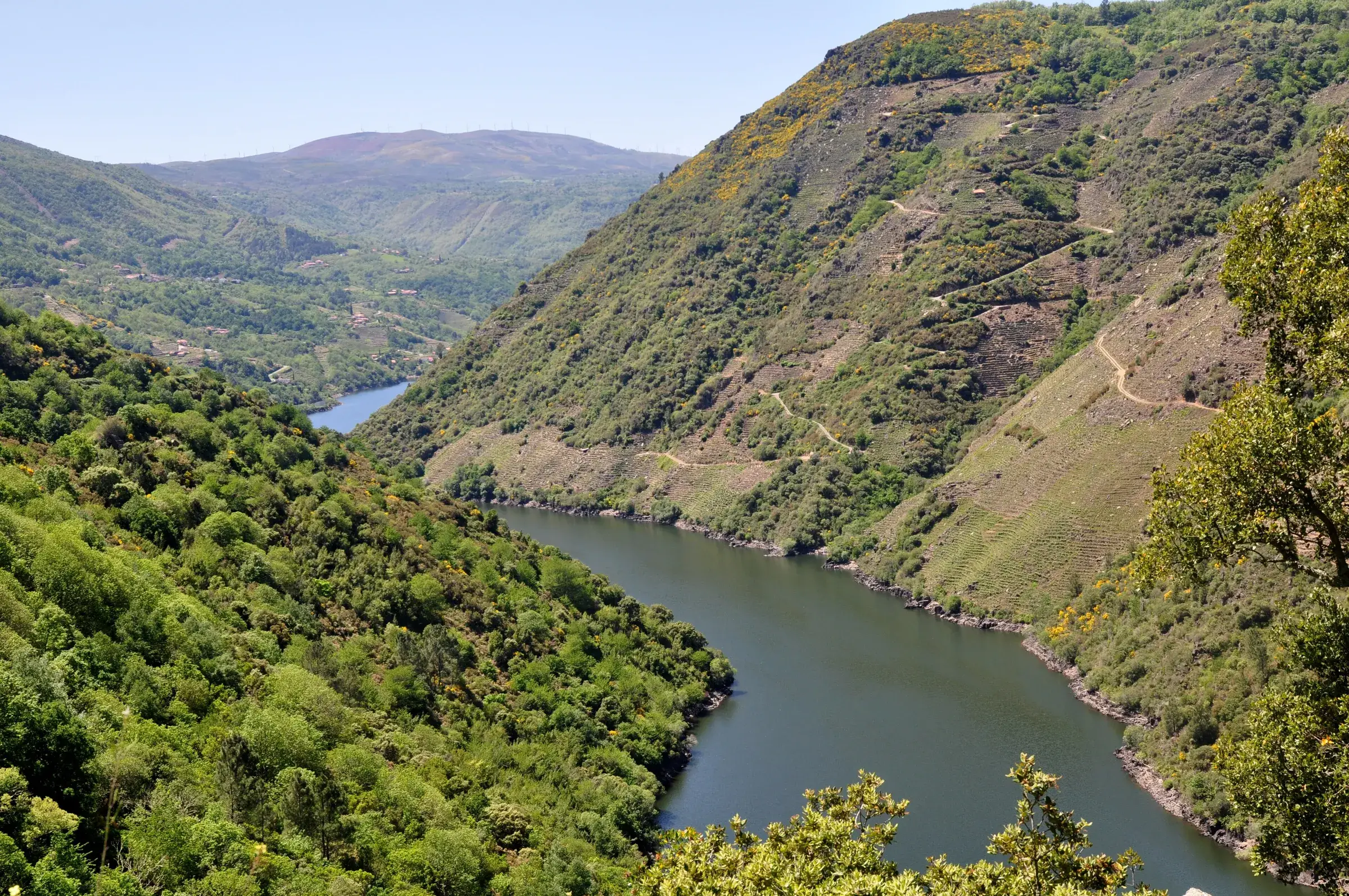
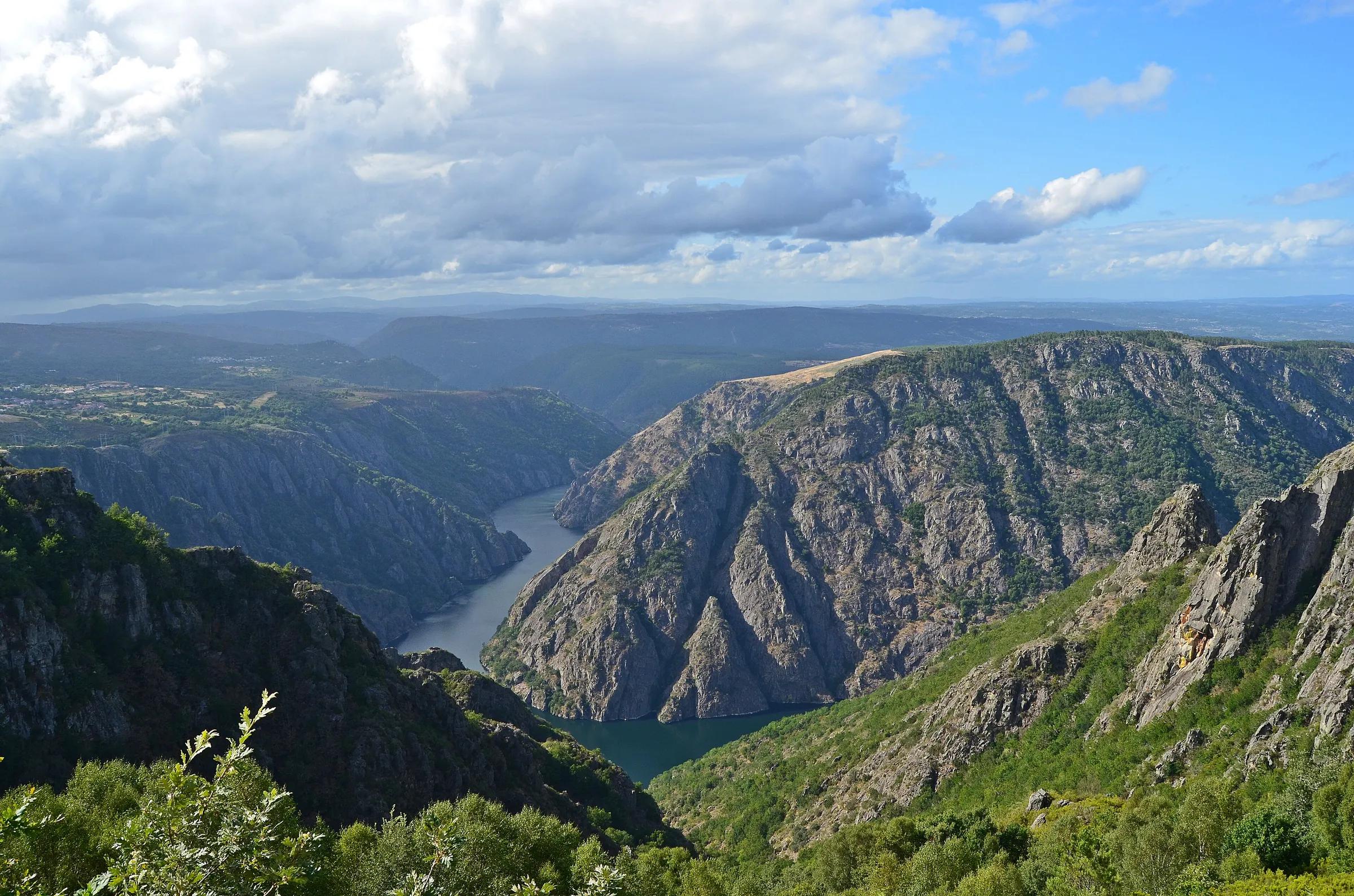
From the viewpoint of Cabezoás, above Parada de Sil, the river is a dark line far below, held between walls so steep they seem to lean inwards. On the sunny side the slopes are stepped from the water to the sky with narrow terraces of vines, built and rebuilt by hand. On the shaded side, chestnut and oak close over the rock, and somewhere in that green a bell tower shows its stone. This is the Ribeira Sacra, where the Sil and the Miño cut through the south of Lugo and the north of Ourense, and where monasteries and vineyards have shared the same improbable ground for centuries.
Two rivers, one landscape
The Miño comes down from the north through Lugo; the Sil arrives from the east through its canyon. They meet at Os Peares, where, in Turismo de Galicia's phrase, the dark waters of the Miño receive the green waters of the Sil. Along both rivers the vines are confined to the banks, on terraces that improve the thin original soil, and they make up the Ribeira Sacra Designation of Origin. The regulatory council lists five subzones (Amandi, Chantada, Quiroga-Bibei, Ribeiras do Miño and Ribeiras do Sil) across twenty municipalities, with Mencía among the preferred red grapes. The designation was authorised by an order of the Xunta de Galicia in September 1996.
The roads follow the same logic as the vines: they cling to the slopes, switch back on themselves and drop to the rivers only where a bridge allows. Distances on the map are short; times on the road are not. The Ribeira Sacra tourism consortium's own monastery route covers about seventy kilometres in a full day, and that is the right pace to keep in mind.
Day one: Ourense and its warm water
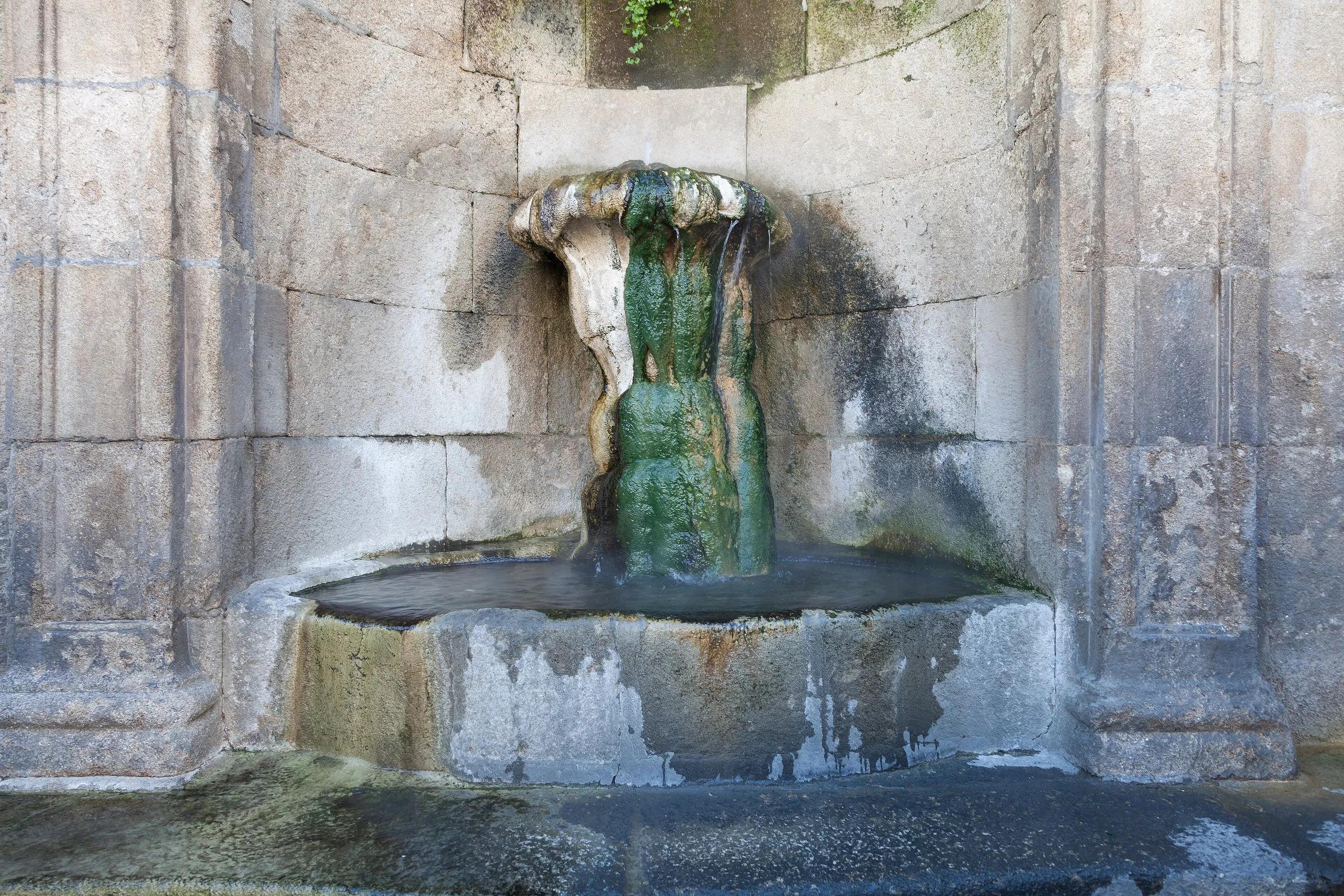
Begin in Ourense, a city that runs on hot water. In its centre the springs of As Burgas rise at around 65 °C beside an old stone fountain, one of the city's symbols. Along the Miño, a thermal walk of about three kilometres links riverside pools from the Campo da Feira to Outariz: A Chavasqueira, O Tinteiro, the Burgo do Muíño das Veigas and Outariz itself. Turismo de Galicia notes that many of the city's springs are free to use, while others sit within private baths. After the water, the cathedral and the old town are close by.
Day two: the Sil canyon and its monasteries
Drive north-east to Santo Estevo de Ribas de Sil, in Nogueira de Ramuín, the most imposing monastery of the Ribeira Sacra, built between the twelfth and eighteenth centuries above the canyon. The building now houses a state-run hotel, but its three cloisters, among them the Cloister of the Bishops, and its church can be visited. Below it, on the river, boats leave from the Santo Estevo jetty. Catamaran trips through the canyon also run from Ponte do Sil and Abeleda; on the Miño, there are trips from Belesar. Operators and seasons vary, so treat a boat as a pleasant possibility rather than a fixed point.
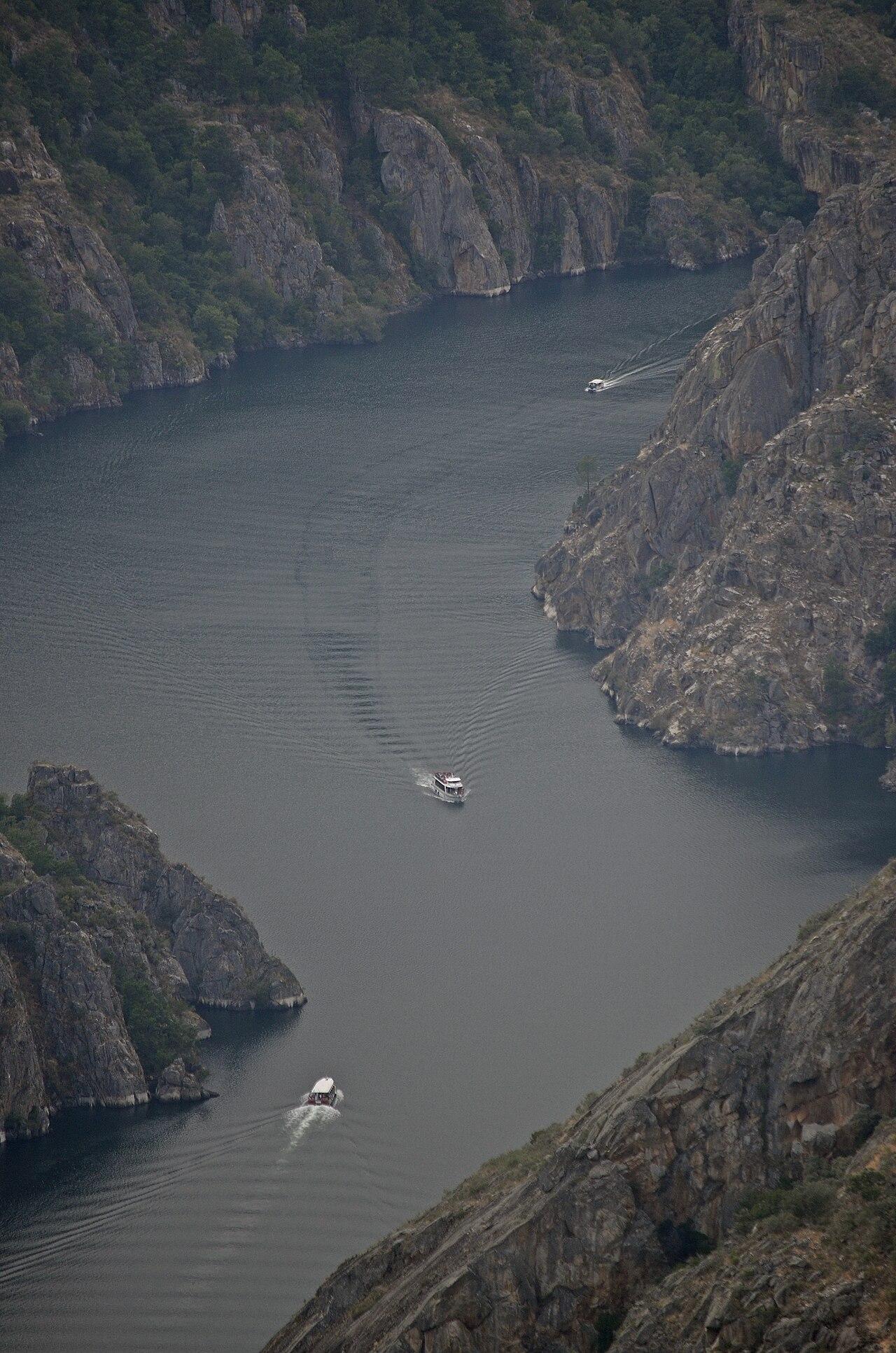
Climb back to the rim road. A short walk from the Paradela turning leads to the Penedos do Castro viewpoint over Santo Estevo; further on, Cabezoás looks down on the last meander of the Sil before the dam. Parada de Sil has, in Turismo de Galicia's words, the steepest and most rugged canyons of the Ribeira Sacra, and the viewpoints known as Os Balcóns de Madrid hang above them. Below, in a chestnut grove, the monastery of Santa Cristina de Ribas de Sil keeps its twelfth-century church, its cloister and a pyramid-shaped bell tower; nature, as the same source says, has taken over the place.
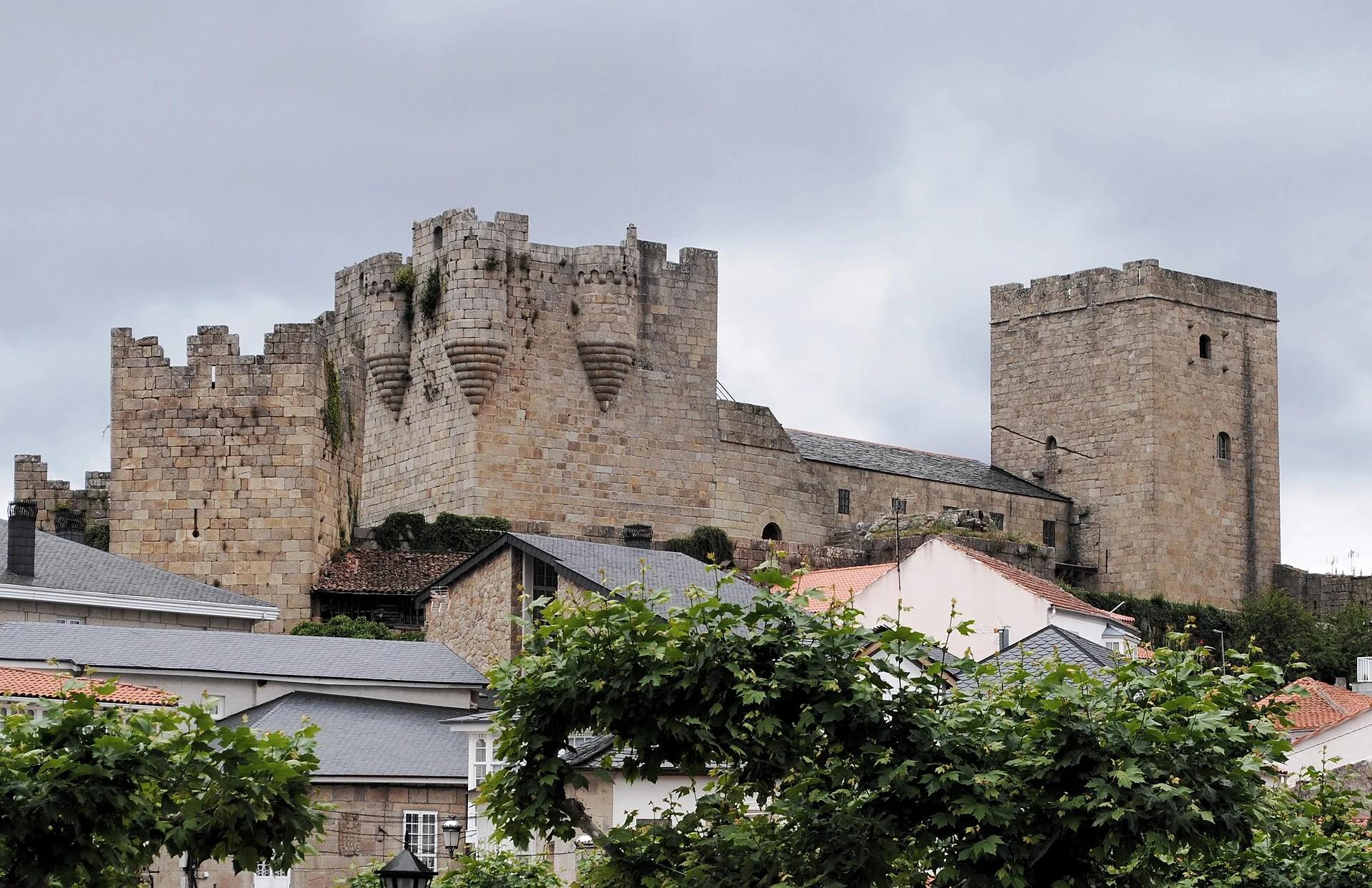
End the day at San Paio de Abeleda, a monastery now in ruins whose church, cemetery and courtyard cloister remain, then climb to Castro Caldelas, where a battlemented castle and its tall square tower rise above slate roofs. It is a good place for the night.
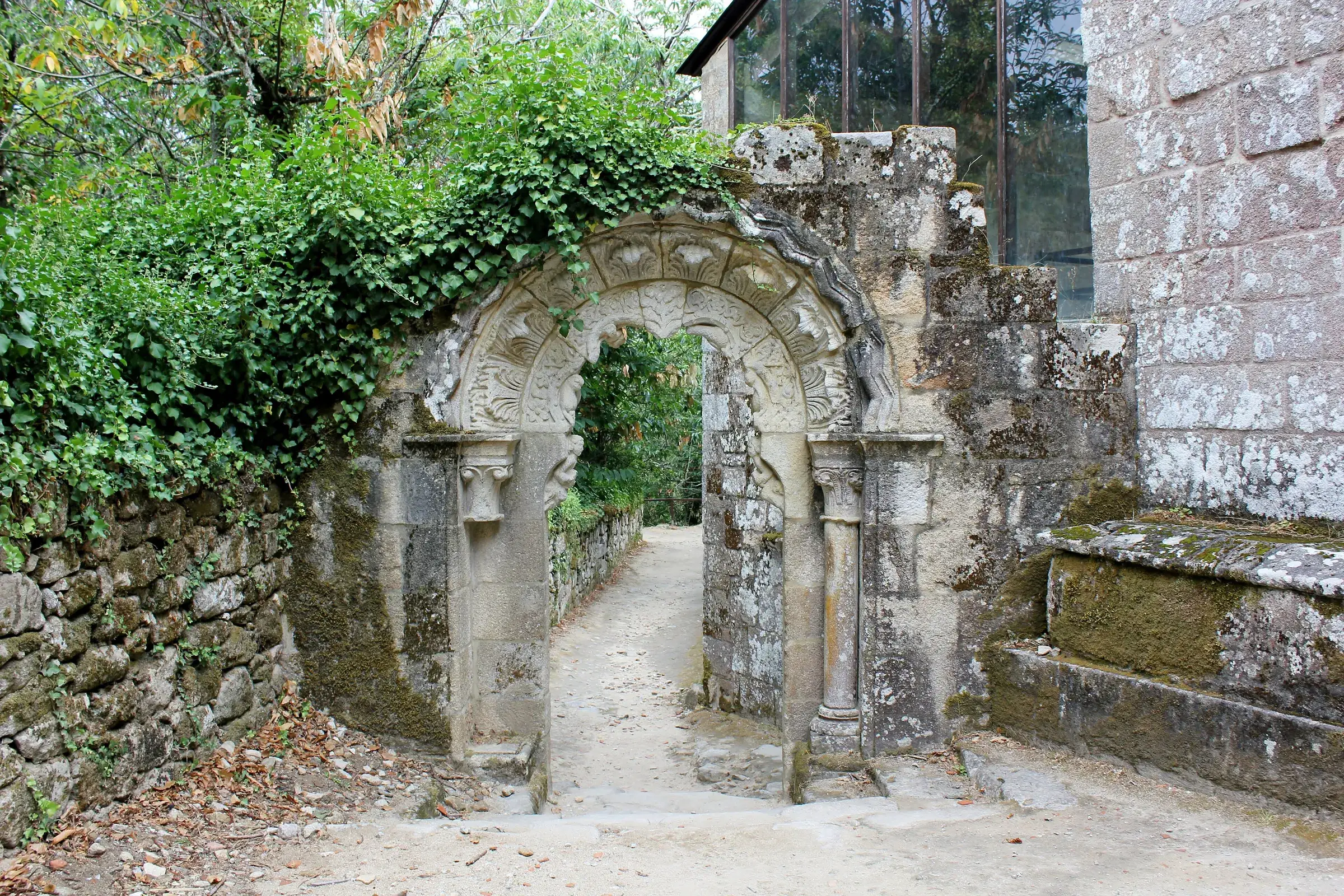 Photo: feelSacra / Wikimedia Commons, CC BY-SA 4.0
 HombreDHojalata / Wikimedia Commons, CC BY-SA 3.0
 Luis Miguel Bugallo Sánchez (Lmbuga) / Wikimedia Commons, CC BY-SA 4.0
Day three: across to the Miño
Cross the Sil into Lugo and the valley of Lemos. In Pantón, the convent of San Salvador de Ferreira is the only place in the Ribeira Sacra where monastic life continues, and Cistercian nuns still live there. Nearby, small Romanesque churches stand among the vines and woods: Santo Estevo de Atán, founded in the eighth century and rebuilt in the twelfth and thirteenth, known for its carved pre-Romanesque shutters, and San Vicenzo de Pombeiro. Monforte de Lemos, the market town of the valley, has a wine centre devoted to the Ribeira Sacra and makes an easy last base.
If you have the afternoon, follow the Miño north towards Chantada. Where the Belesar reservoir widens the river, the remains of Castro Candaz stand on a promontory in the still water, and the terraced vineyards of Belesar climb the opposite bank.
Driving the canyons
- Many roads here are narrow and full of bends, often with a drop on one side and little room to pass. Keep speeds low, expect oncoming traffic on every blind corner, and pull in to let others by.
- The official route notes recommend the most scenic back road towards A Teixeira only when the days are long. In autumn and winter, finish canyon driving before dusk.
- Where two routes exist, the wider main road is often quicker than the shorter one on the map.
- Tasting wine and driving these roads do not mix; if you visit wineries, choose a driver or a guided visit.
Make it your own
This is a trip that rewards subtraction. If the canyon road on day two feels like enough, skip Abeleda and stay a second night in Castro Caldelas; if you love the water, give Ourense a whole extra day. Copy the route into My trips and reshape it as the light and the roads allow.
The route
The Ribeira Sacra and the Sil canyon
Slow, narrow roads: allow far more time than the map suggests.
Day 1
Ourense and its hot springs
- As Burgas
The hot springs in the centre, then the thermal walk along the Miño.
Day 2
The Sil canyon
- Canón do Sil
Santo Estevo's cloisters, the jetty and the Penedos do Castro viewpoint.
- Parada de Sil
Cabezoás, Os Balcóns de Madrid and Santa Cristina (booking needed).
- Monasterio de San Paio de Abeleda
The ruined monastery of San Paio.
- Castillo de Castro Caldelas
The hilltop village of Castro Caldelas and its castle.
Good area for the night
Day 3
Lemos and the Miño
- Mosteiro de San Salvador de Ferreira de Pantón
The convent where monastic life continues.
- Mosteiro de Santo Estevo de Atán
A small Romanesque church among the woods.
- Castro Candaz
An optional afternoon on the Miño near Chantada.
Copy this route to My trips
An editable trip: drop a stop, stay longer, add your own. Nothing is booked.
Practical details checked on 8 November 2026. Rules, access and seasons change. Check the official sources below before you go.
Sources
- Turismo de Galicia: Ribeira Sacra, entre vides e mosteiroschecked 8 November 2026
- Turismo Ribeira Sacra: Día 2, ruta de los monasterioschecked 8 November 2026
- Consello Regulador D.O. Ribeira Sacra: datos del consejo reguladorchecked 8 November 2026
- Turismo de Galicia: Ourensechecked 8 November 2026
Take it further
If this story set you thinking, here is where to take it next.
Series
In the series The seven provinces around
Journeys & Road Trips
From the Montaña Palentina to Las Merindades
Adventure & Outdoors
Fuente Dé and the high Picos
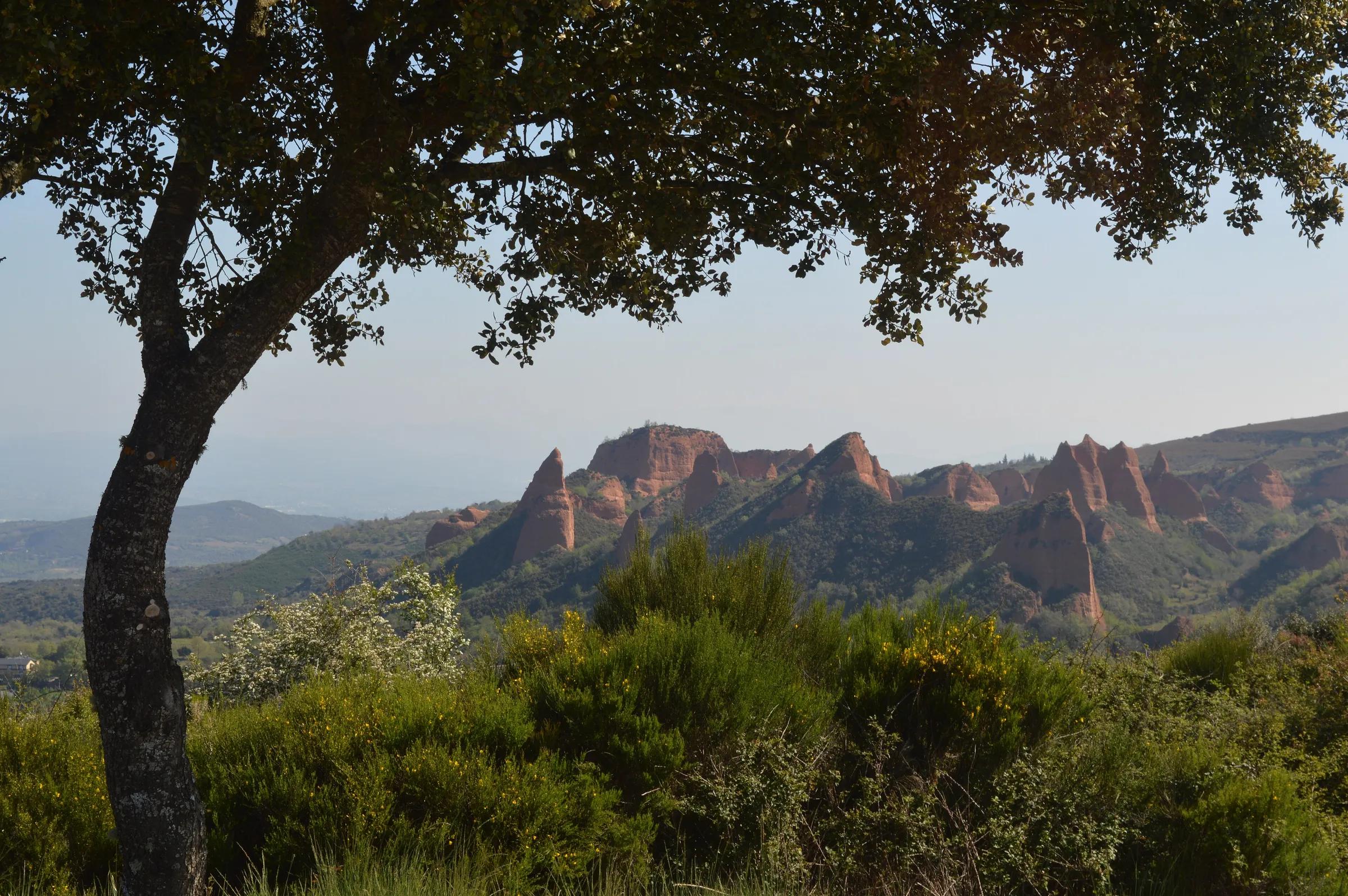
Life & Culture
Las Médulas: the mountains the Romans brought down
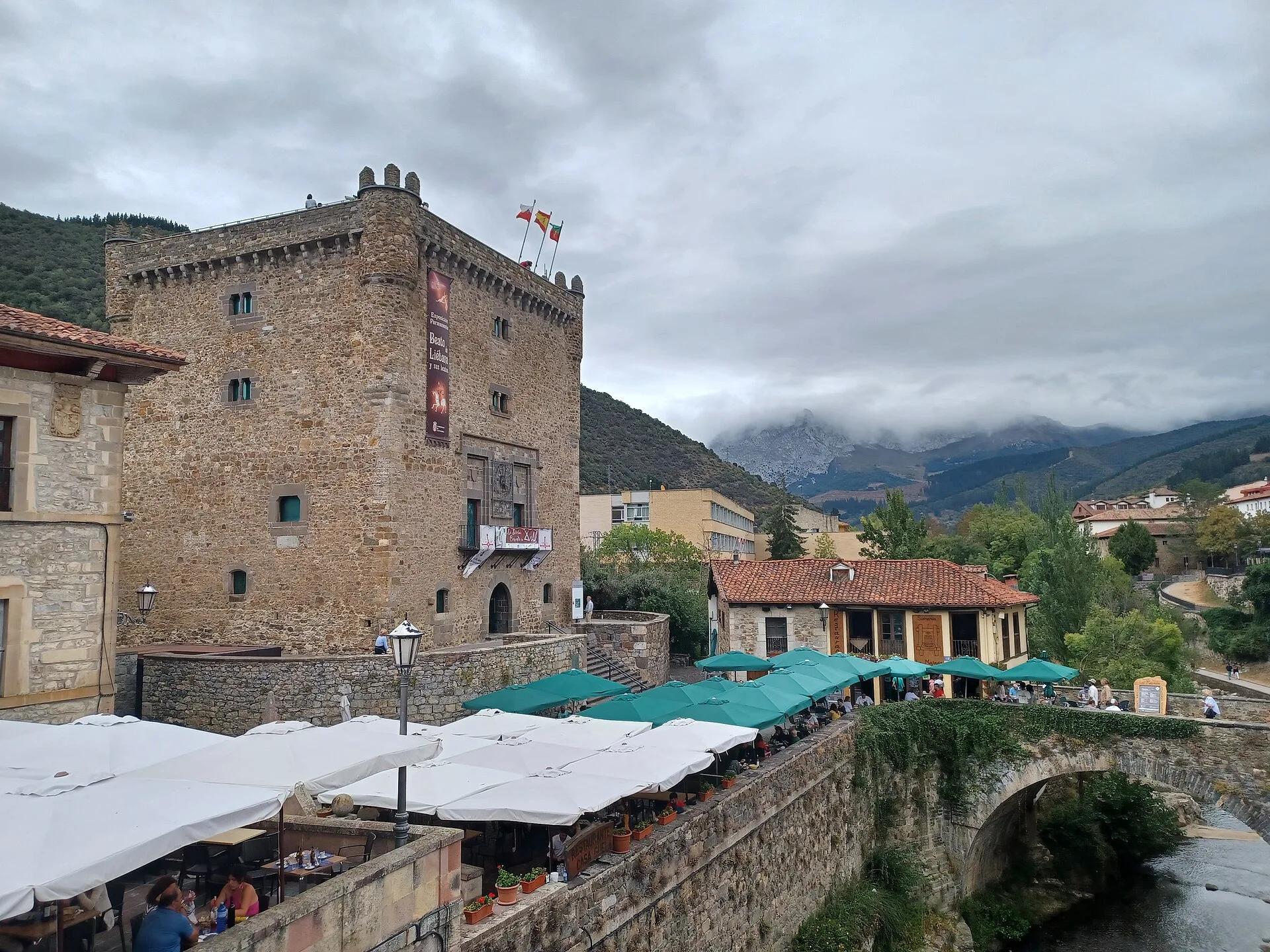
Places & Destinations
Potes and the Liébana valley
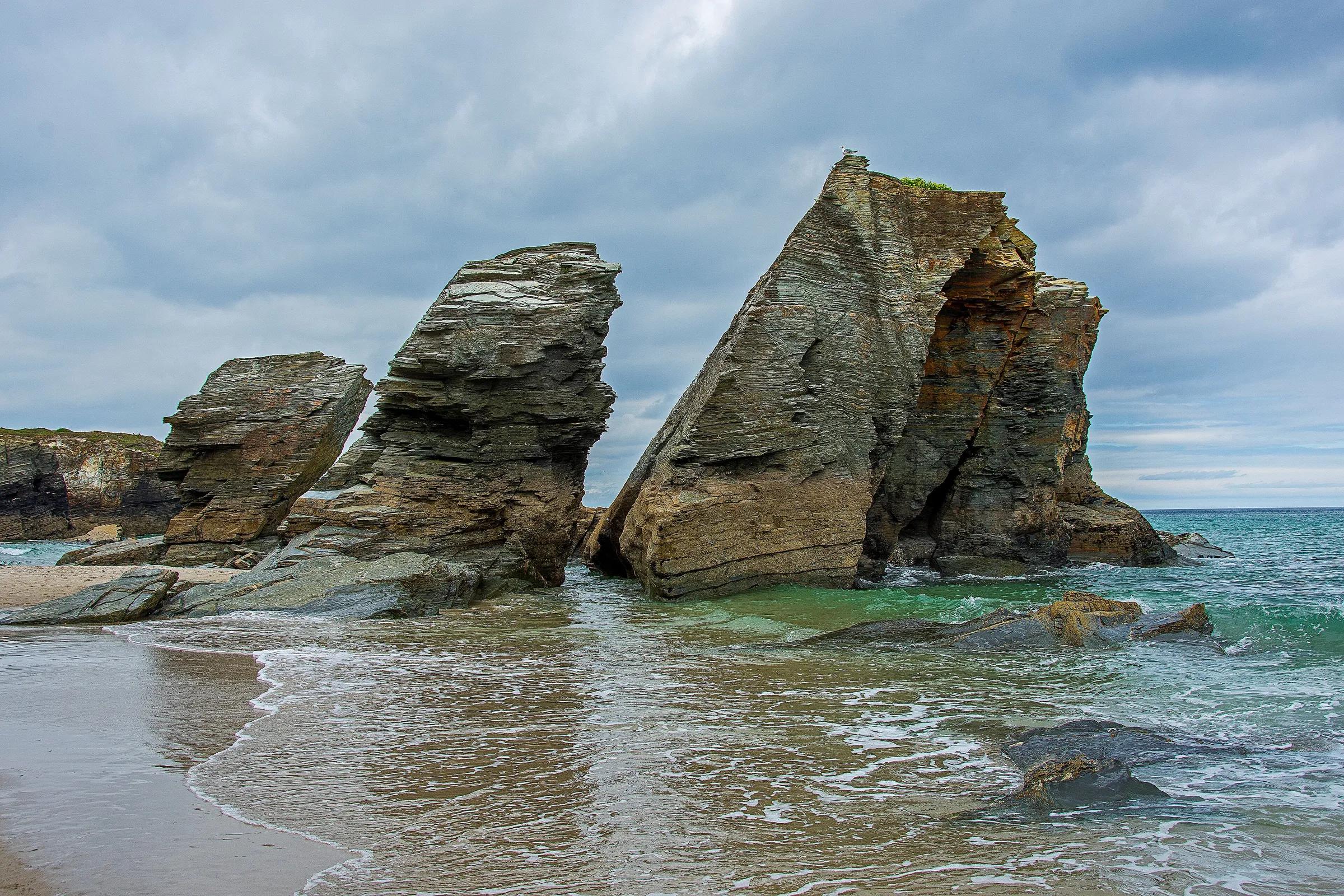
Places & Destinations
Praia das Catedrais: tides and booking
Journeys & Road Trips
The Ribeira Sacra and the Sil canyon