
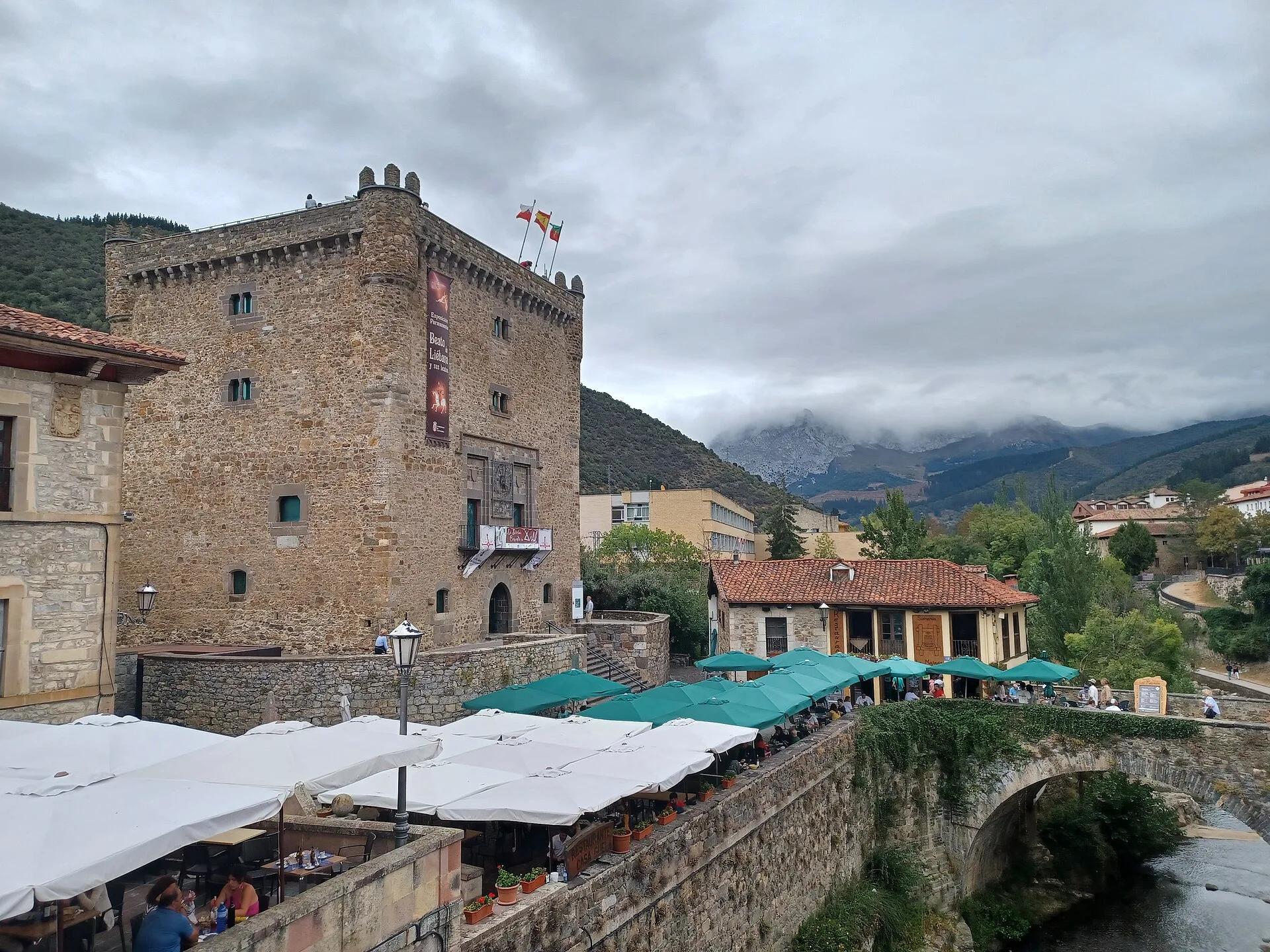
 Simon Burchell / Wikimedia Commons, CC BY-SA 4.0
Destination journal
Potes and the Liébana valley
A stone town where rivers meet, a monastery that has drawn pilgrims for centuries, and a road that reaches it all through one of the deepest gorges in the north.
6 min read· By the Tierra Luma editors
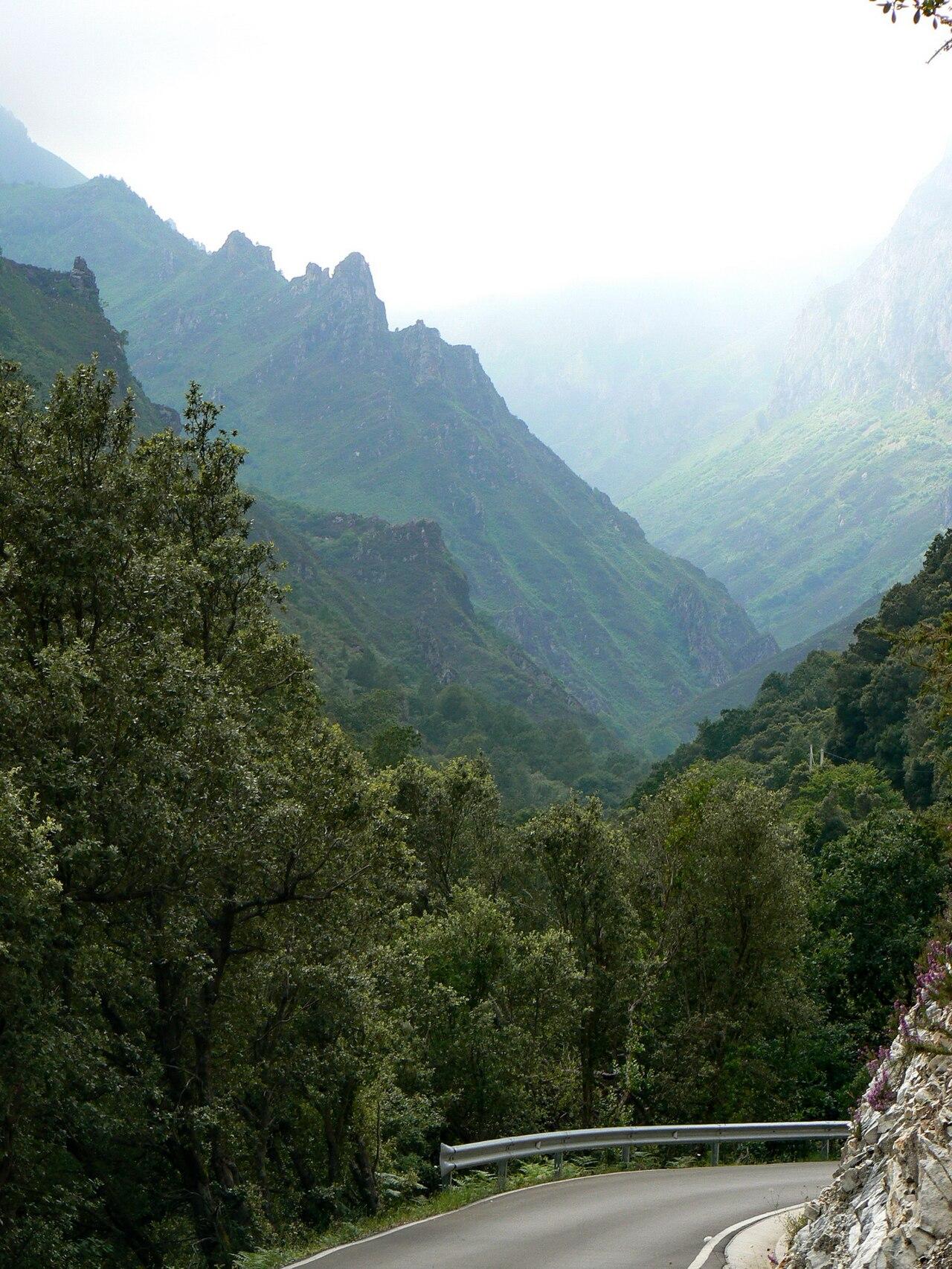
The road leaves the coast at sea level and, within minutes, the light changes. Limestone walls close in on both sides of the river Deva, the sky narrows to a strip, and for long stretches the only things that seem to move are the water, the traffic and the vultures turning high above. Then the walls open, the valley widens into orchards and walnut trees, and a town of stone roofs and towers appears where the valley's rivers meet. This is Potes, the old capital of Liébana, and the gorge you have just driven through is the Desfiladero de La Hermida.
Liébana is a world of its own: a bowl of valleys on the southern side of the Picos de Europa, closed to the north by the mountains and reached from the sea by that single deep cut. It has its own climate: the Fundación Camino Lebaniego describes a temperate, sunny enclave sheltered by its ring of mountains, with far less rain than the peaks around it. It has its own produce, too, and a spiritual centre that has drawn pilgrims for well over a thousand years.
Highlights
The places in this story
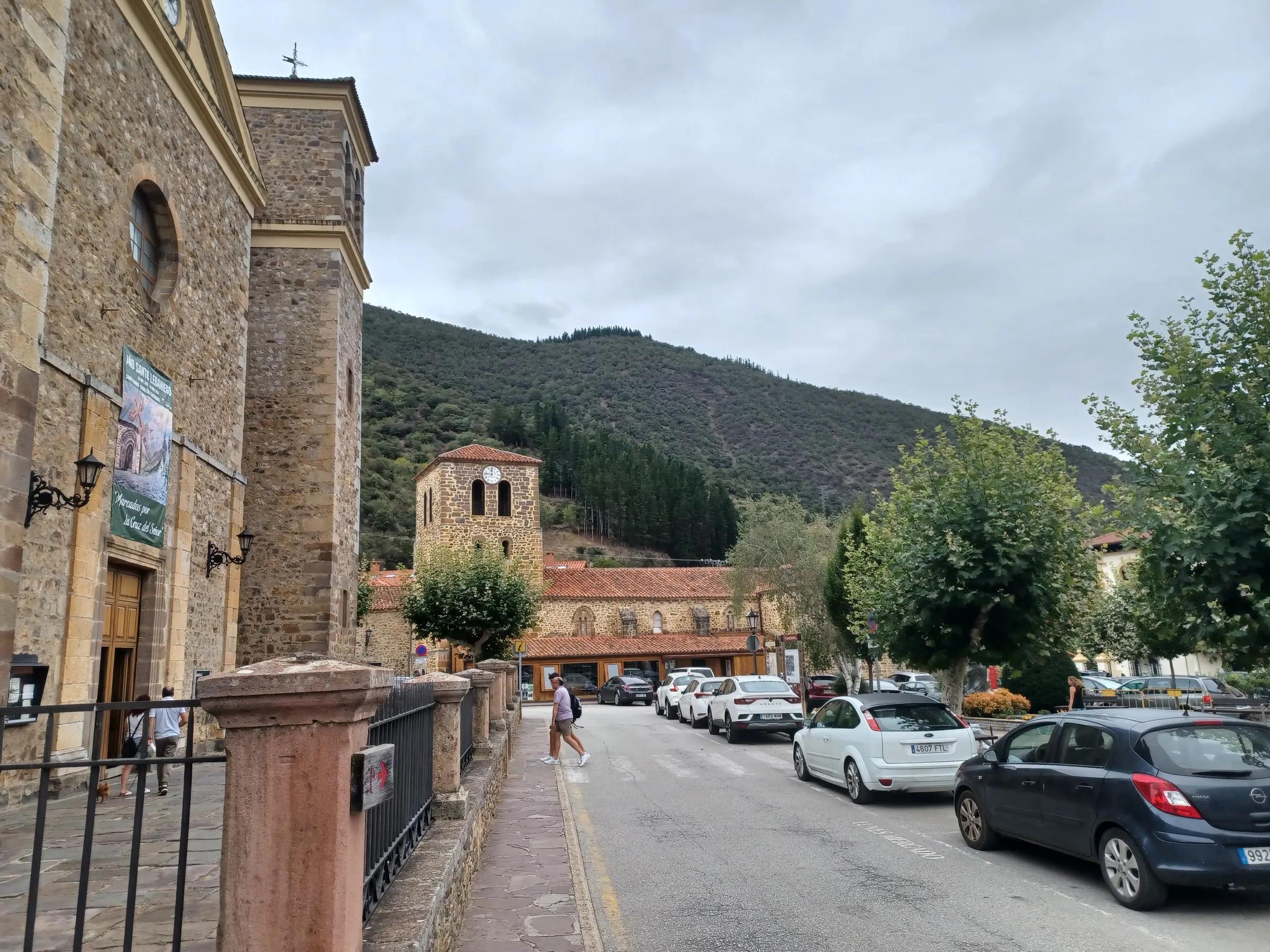
- PotesThe stone capital of Liébana, under the eastern Picos.
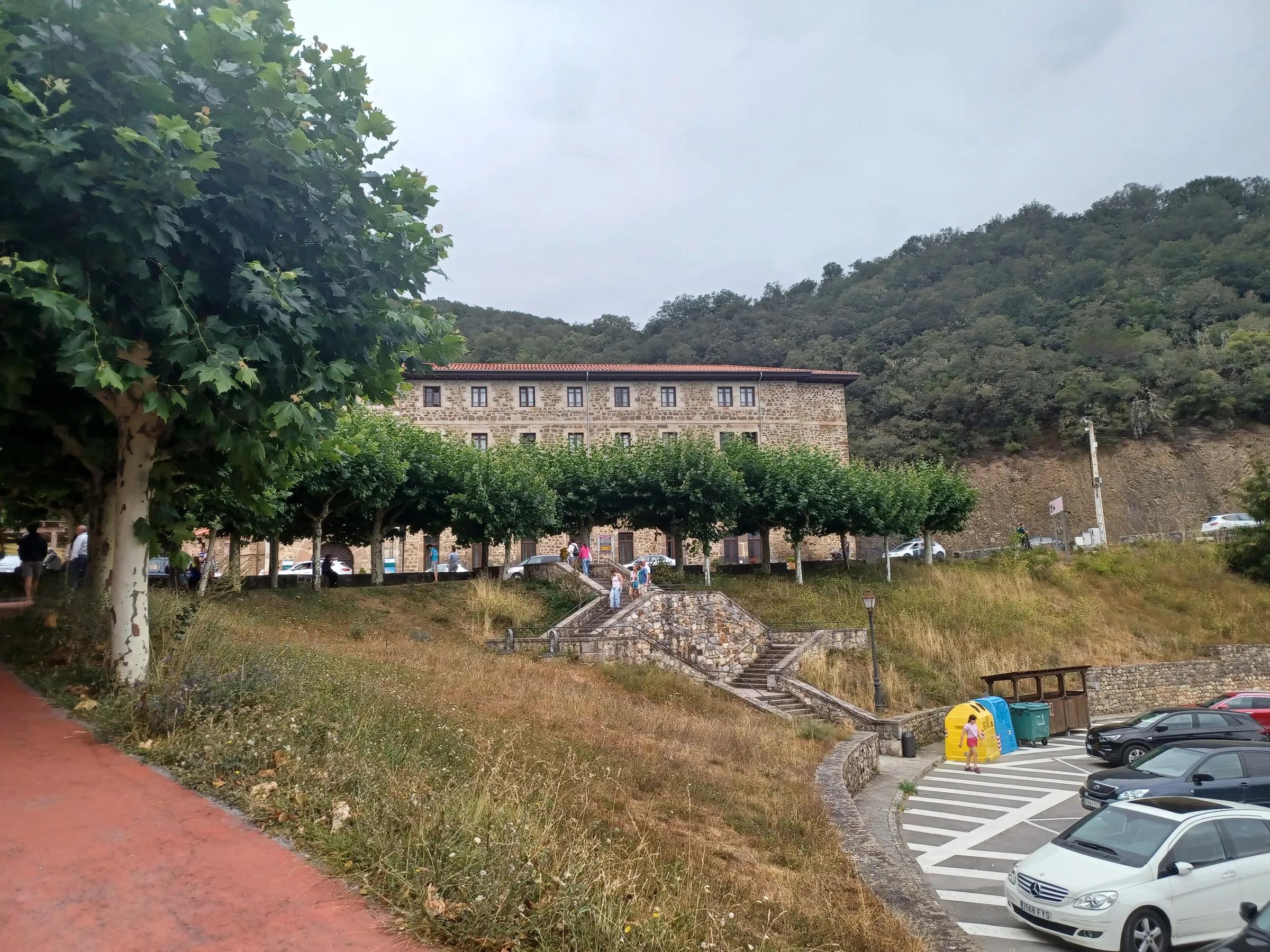
- Monasterio de Santo Toribio de LiébanaA Franciscan monastery near Potes, in the Liébana valley, that keeps the Lignum Crucis relic; since a papal bull of 1512 it holds a Jubilee Year whenever 16 April, the feast of Santo Toribio, falls on a Sunday. Its Gothic church, in the Cistercian-influenced monastic style, was built from 1256.
- Desfiladero de La HermidaThe river Deva has cut this narrow gorge between almost sheer limestone walls, some more than 600 m high, over roughly 22 km. It is the way into Liébana from the Cantabrian coast, followed by the N-621 road, and takes its name from the village of La Hermida.
It is a place that rewards staying put for several days rather than passing through.
Chapter oneWhy go
Come for the shape of the land as much as for any single sight. In a few kilometres Liébana gathers a gorge, a market town, a medieval monastery and, at the head of the valley, the sheer walls of Fuente Dé, where a cable car lifts walkers into the high Picos. It is a place that rewards staying put for several days rather than passing through: the valley changes with the hour, and the best of it is often found on foot, on the lanes between villages.
Chapter twoHighlights
Potes, the town of bridges
Liébana is the upper basin of the Deva and of its tributaries, among them the Quiviesa, and Potes sits at its geographical centre, in what Turespaña calls an area where rivers and streams converge. Its old bridges, San Cayetano and La Cárcel, still carry people across the Quiviesa between houses with wooden balconies. Above the rooftops stands the Torre del Infantado, a solid fifteenth-century tower that until recently housed the town hall and is the emblem of the town. Turespaña's guide to Potes notes a traditional market every Monday, where the valley's produce is sold, and a festival dedicated to orujo, the valley's spirit distilled from grape skins, in November; its calendar places the festival on the second weekend of the month.
Santo Toribio de Liébana
A short way above Potes, on the slope of the valley, stands the monastery of Santo Toribio de Liébana. The Fundación Camino Lebaniego tells its story in layers. Tradition credits its foundation to Toribio of Palencia, a monk of the sixth century. In the eighth century, perhaps for safekeeping, the remains of Bishop Toribio of Astorga were brought here, together with the relic that has defined the place ever since: the Lignum Crucis, which tradition holds to be the largest surviving fragment of the Cross of Christ, the left arm of the cross that Toribio of Astorga is said to have brought from Jerusalem.
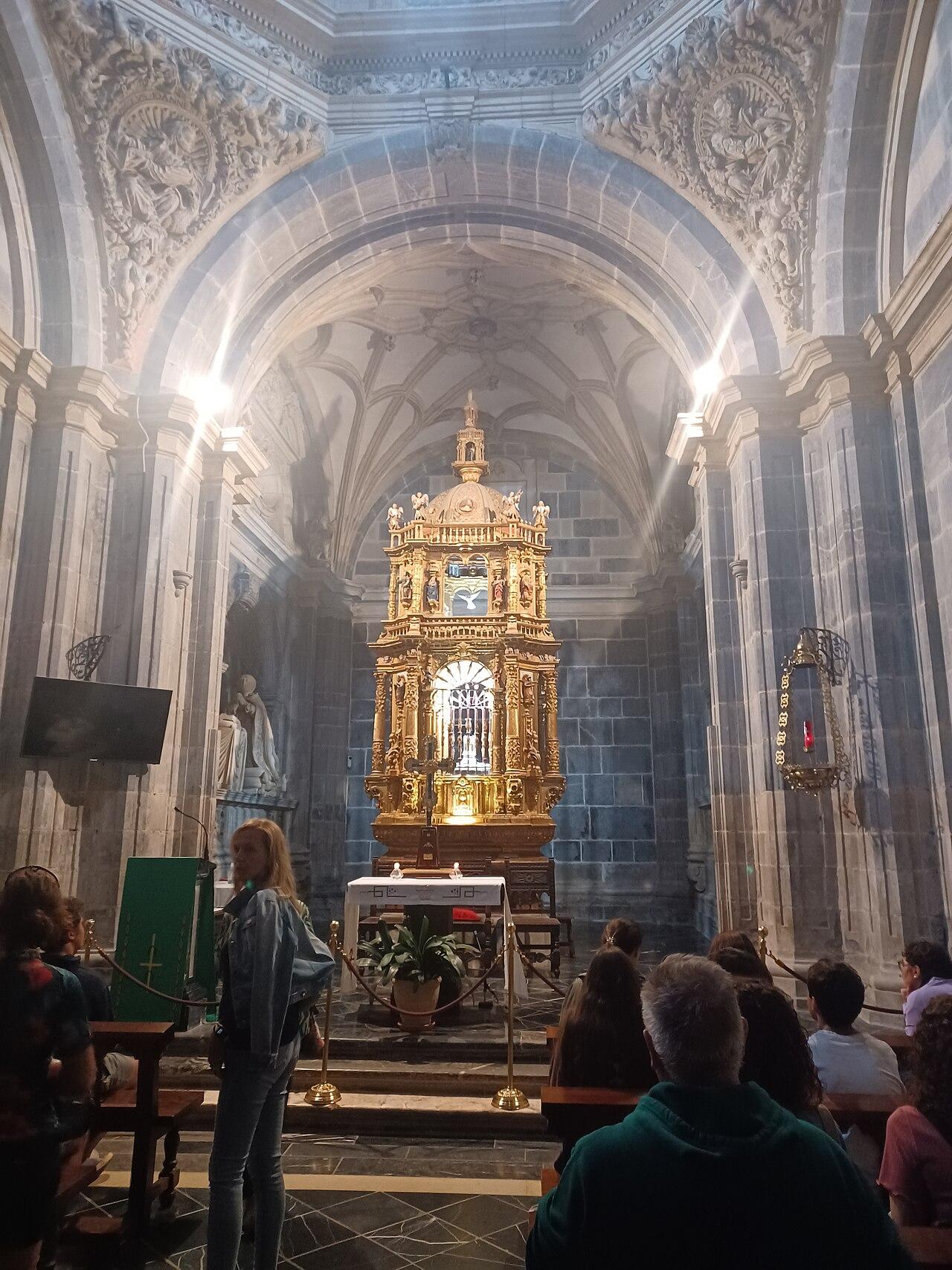
The same century gave the monastery its great writer. Beatus of Liébana, a monk here, wrote his Commentary on the Apocalypse, a book copied and illuminated across medieval Spain. The church you see today dates from 1256 and is built in the monastic Gothic of Cistercian influence; its Puerta del Perdón, the Door of Forgiveness, is Romanesque, and the relic is kept in a Baroque chapel added in the eighteenth century. The community, once Benedictine, is now Franciscan.
Santo Toribio is one of the places of the Church where a jubilee year is held. In the words of the 2025 agreement between the Fundación Camino Lebaniego and the Diocese of Santander, the Año Jubilar Lebaniego is celebrated in every year when 16 April, the feast of Santo Toribio, falls on a Sunday, and it opens with the Puerta del Perdón. The Fundación Camino Lebaniego counts the jubilee of 2017 as the seventy-third and that of 2023–2024 as the seventy-fourth. The same agreement names 2028 as the next, and the foundation is already preparing it as the Año Santo Jubilar Lebaniego 2028–2029. Pilgrims who walked here to venerate the relic were known as crucenos, pilgrims of the Cross, and the Camino Lebaniego is still waymarked today.
The Desfiladero de La Hermida
For most travellers, the gorge is the way in. The road from the coast follows the Deva through La Hermida, a narrow natural gorge between walls of limestone. It is a drive to take slowly, in daylight, with time to stop where it is safe. Within the gorge stands Santa María de Lebeña, a small pre-Romanesque church founded in the first half of the tenth century, which the Fundación Camino Lebaniego counts among the finest examples of Mozarabic architecture in Spain: a reminder that people have been crossing this landscape, and building in it, for a very long time.
Chapter threeGetting there and around
From eastern Asturias and the Cantabrian coast, the usual way in is the road through La Hermida, which follows the Deva between Panes, on the Asturian side, and Potes. The Fundación Camino Lebaniego recalls that before the gorge road opened, in 1873, Liébana's contacts with Santander and the coast were scarce, and less frequent than with Castile. From the south, mountain roads cross passes into the valley; they are slow, and in winter snow can affect them. Once in Potes, the road continues up the valley of the Deva through Camaleño to Fuente Dé, at its head.
Chapter fourSeasons
Spring brings blossom to the orchards and snow still lying on the peaks, the best contrast of the year. Summer is the busiest season, when Potes fills on market days and the road to Fuente Dé is at its liveliest. Autumn is quieter and many think it the finest: the woods turn, the walnuts and chestnuts fall, and November brings the orujo festival. Winter is short-dayed and calm in the town, with the high mountains closed to all but experienced, well-equipped people.
Chapter fivePractical notes
- Potes has a Monday market; parking in the town is easier early in the day.
- The monastery is a short drive or a steady uphill walk from Potes; check visiting times before you go.
- Combine the valley with a day at Fuente Dé, at the head of the Deva, if the weather is clear.
- In a jubilee year the monastery receives many more visitors; plan for crowds around the main feast days.
Chapter sixNearby discoveries
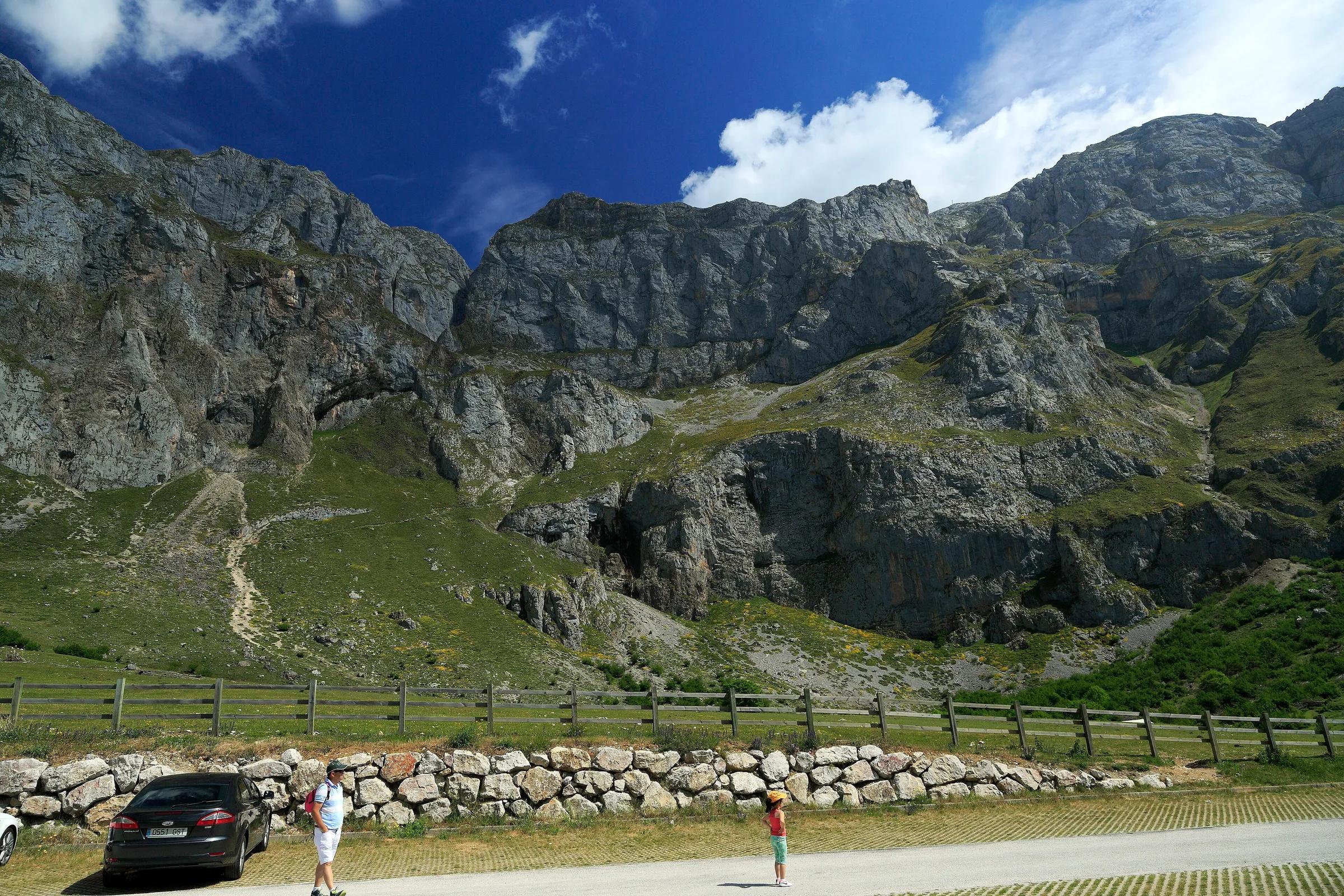
Up the valley, the road ends below the cliffs of Fuente Dé, where the cable car rises into the Picos and walkers set out across the high pastures of Áliva; we cover that in its own guide. Back towards the coast, the church of Lebeña rewards a stop on the way through the gorge, and to the east the valley of the Nansa offers a quieter, greener counterpoint to Liébana. Each is a good reason to stay another night rather than to hurry.
Nearby
Nearby, if you have time
Practical details checked on 8 November 2026. Rules, access and seasons change. Check the official sources below before you go.
Sources
- Fundación Camino Lebaniego — Monasterio de Santo Toribiochecked 8 November 2026
- Fundación Camino Lebaniego — Año Jubilar Lebaniegochecked 8 November 2026
- Fundación Camino Lebaniego — home pagechecked 8 November 2026
- Turespaña (spain.info) — Poteschecked 8 November 2026
- Turespaña (spain.info) — Potes (Spanish: ríos y arroyos confluyen, mercado de los lunes)checked 8 November 2026
- Turespaña (spain.info) — Fiesta del Orujo, Potes (second weekend of November)checked 8 November 2026
- Convenio Fundación Camino Lebaniego – Diócesis de Santander, 30 Dec 2025 (jubilee rule; next jubilee 2028)checked 8 November 2026
- Fundación Camino Lebaniego — Plan de actuación 2026 (Año Santo Jubilar Lebaniego 2028–2029)checked 8 November 2026
- Fundación Camino Lebaniego — Naturaleza (Liébana: upper Deva basin, Quiviesa; climate)checked 8 November 2026
- Fundación Camino Lebaniego — El legado religioso de Liébana (Santa María de Lebeña)checked 8 November 2026
- Fundación Camino Lebaniego — Peñarrubia (the La Hermida road, Potes–Panes, 1873)checked 8 November 2026
- MITECO — Picos de Europa, el medio natural (the Deva from Fuente Dé through La Hermida to Panes)checked 8 November 2026
Take it further
If this story set you thinking, here is where to take it next.
Series
In the series The seven provinces around
Journeys & Road Trips
From the Montaña Palentina to Las Merindades
Adventure & Outdoors
Fuente Dé and the high Picos
Life & Culture
Las Médulas: the mountains the Romans brought down
Places & Destinations
Potes and the Liébana valley
Places & Destinations
Praia das Catedrais: tides and booking
Journeys & Road Trips
The Ribeira Sacra and the Sil canyon