
 Giorgio Galeotti / Wikimedia Commons, CC BY-SA 4.0
Destination journal
Cangas de Onís and Covadonga
A medieval bridge over the Sella, a chapel built on a dolmen, a cave shrine above a waterfall and a road that climbs to the lakes: the old heart of Asturias, and how to see it without the crowds deciding for you.
6 min read· By the Tierra Luma editors
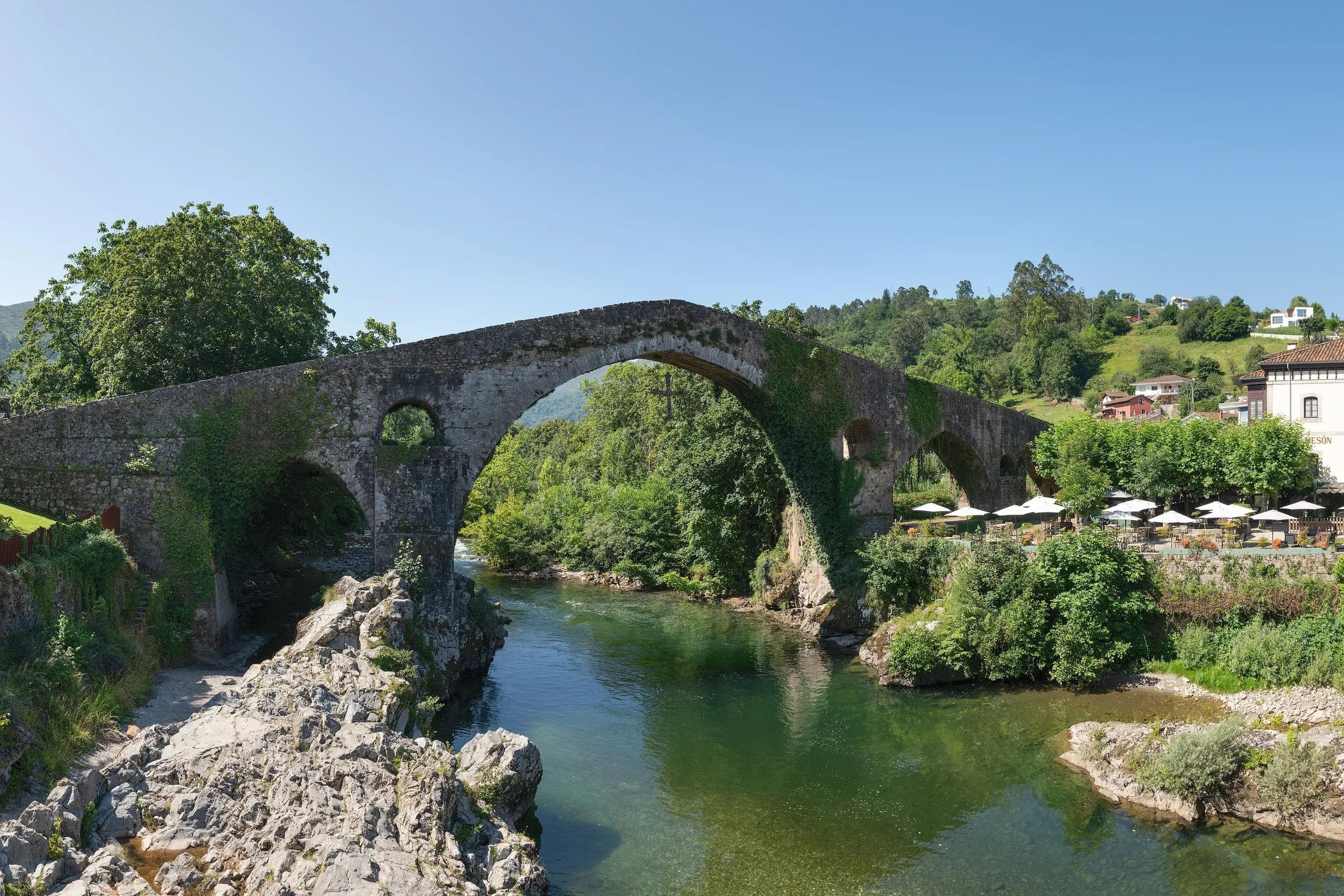
Morning on the Sella: the water runs green and quick over stones, and a high stone bridge leaps across it in one tall central arch with two smaller ones at its shoulders. Beneath the middle arch hangs a cross. Upstream the valley narrows towards limestone that is already the Picos de Europa. Few places in Asturias say so much in a single view: the river that shaped the east of the region, a crossing that has carried people for centuries, and an emblem the whole region still flies.
Cangas de Onís and the sanctuary of Covadonga, a few kilometres further into the mountains, are usually visited together and often in a hurry. This guide is for slowing down: what to look at in the town, how the cave, the waterfall and the basilica fit together, and how to think about the road that climbs on to the lakes.
Highlights
The places in this story
- Cangas de OnísThe historic gateway town to Covadonga and the western Picos de Europa.
- CovadongaSanctuary, cave chapel and pink basilica at the foot of the Picos.
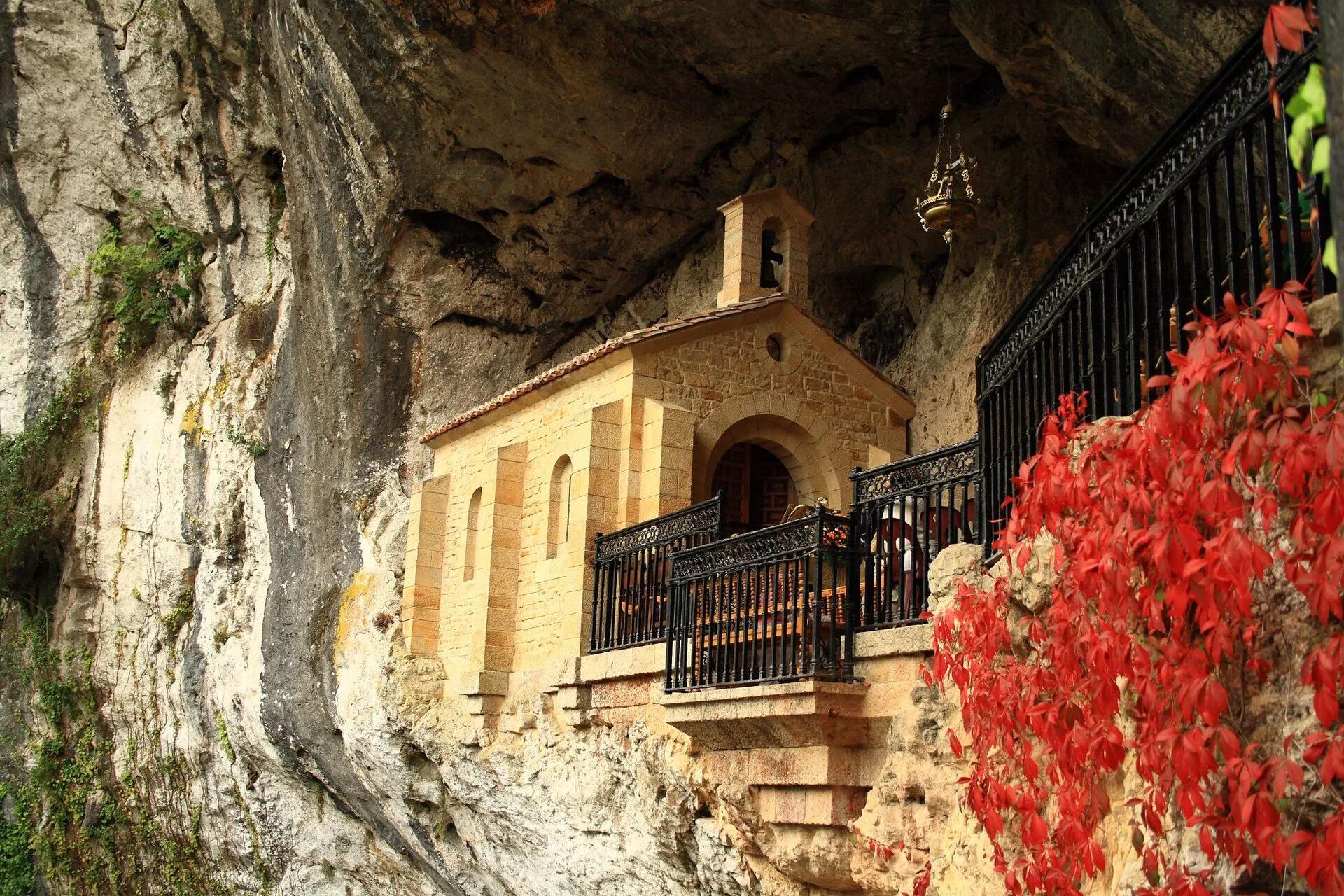
- Santa Cueva de CovadongaSanta Cueva de Covadonga is a cave in Cangas de Onís, Asturias. It is listed as bien de interés cultural. Facts from Wikidata; opening times and prices are on the official website where there is one.
- Lagos de CovadongaTwo glacial lakes, Enol and Ercina, high in the Picos de Europa National Park.
It is a small building, easily missed; it holds several thousand years in a few square metres.
Why go
Turismo Asturias calls Cangas de Onís the first city and court of the Asturian monarchy, and the town's coat of arms carries the motto "the smallest of cities, the greatest of capitals". Here, according to the chronicles, Pelayo led a revolt from 718, and in 722 his followers defeated a Muslim army at Covadonga: a battle the regional tourism board describes, carefully, as true for some and legendary for others. Either way it is the founding story of the Kingdom of Asturias, whose court stayed in the north until it moved to León in 910.
There is also a more recent history. The town was where the Montaña de Covadonga National Park was born, the park that is today the Picos de Europa National Park. Cangas de Onís is still one of the main gateways to it, a working town of some 6,800 people with a traditional Sunday market, shops for walkers and the bus to the lakes in summer.
Highlights
The bridge that is not Roman
Everyone calls it the Puente Romano, but the bridge you cross today is medieval, possibly from the end of the thirteenth century according to Spain's tourism board. Its three arches are slightly pointed, the central one far larger and higher than the two unequal ones beside it, a Romanesque shape already leaning towards Gothic. The cross under the main arch is a reproduction of the Cruz de la Victoria, a piece of goldsmith's work from the early tenth century whose original is kept in Oviedo cathedral. Go early or late, when the stone takes the low light and the coaches have not yet arrived.
A chapel on a dolmen
On the other side of town, the chapel of Santa Cruz keeps one of the oldest layers of all. Turismo Asturias records that it was commissioned by Favila, Pelayo's son, with his wife Froiliuba, consecrated in 737, and built directly on top of a Neolithic dolmen that can still be seen. It is a small building, easily missed; it holds several thousand years in a few square metres.
The Santa Cueva and the waterfall
At Covadonga the valley closes into a wall of rock, and halfway up it, in a hollow of the cliff, sits the Santa Cueva: the cave chapel where the image of the Virgin of Covadonga, la Santina, is venerated. Below it the River Mestas falls in a white rope of water into a pool, el pozón, and on its left the Fountain of the Seven Spouts keeps an old promise that any girl who drinks from it will marry within the year. The first church here burned on 17 October 1777, image and all; the cave as it looks now was redesigned after the Civil War by Luis Menéndez Pidal. Each year the novena ends on 8 September, the day of the Santina, and the sanctuary is at its fullest.
The basilica
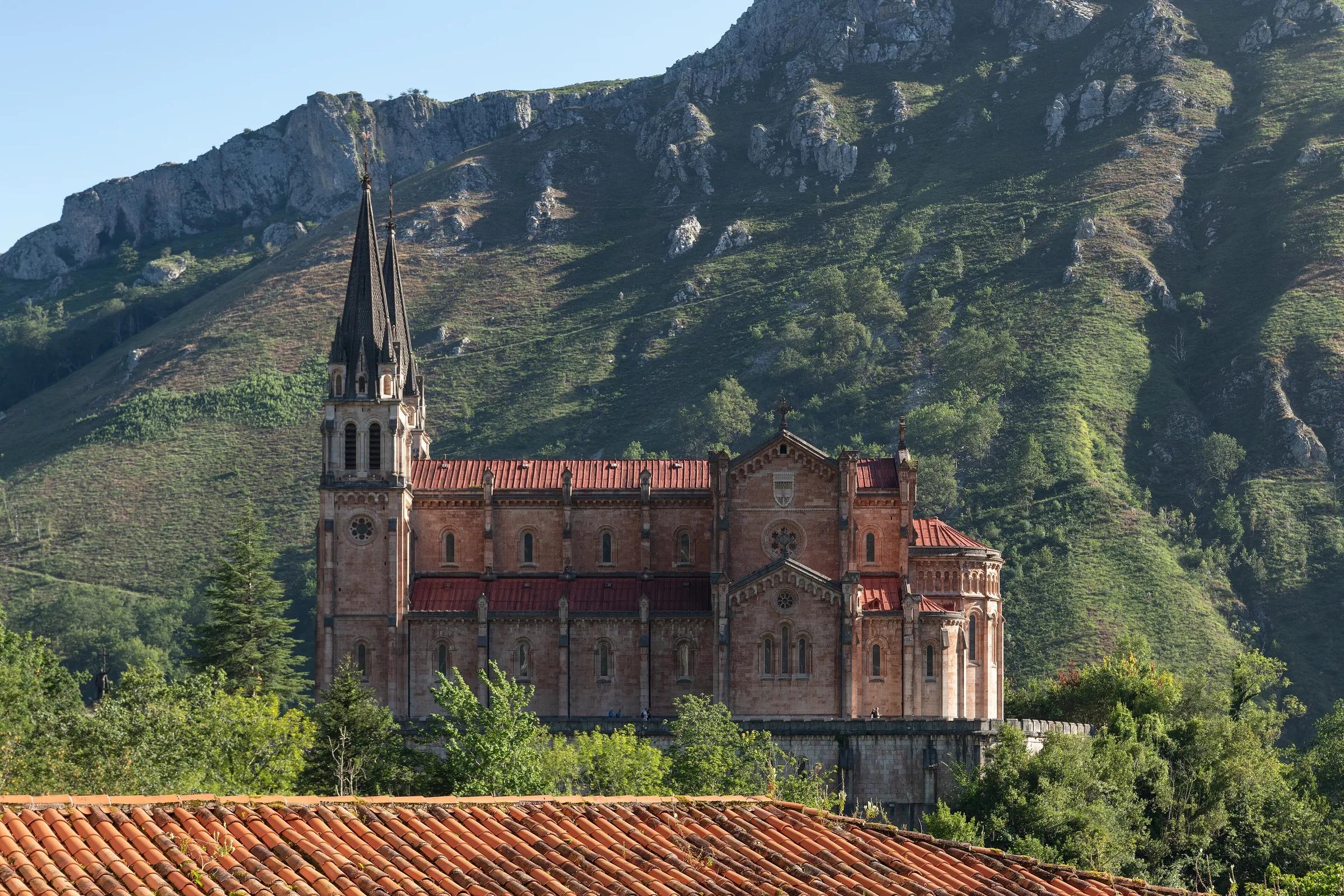
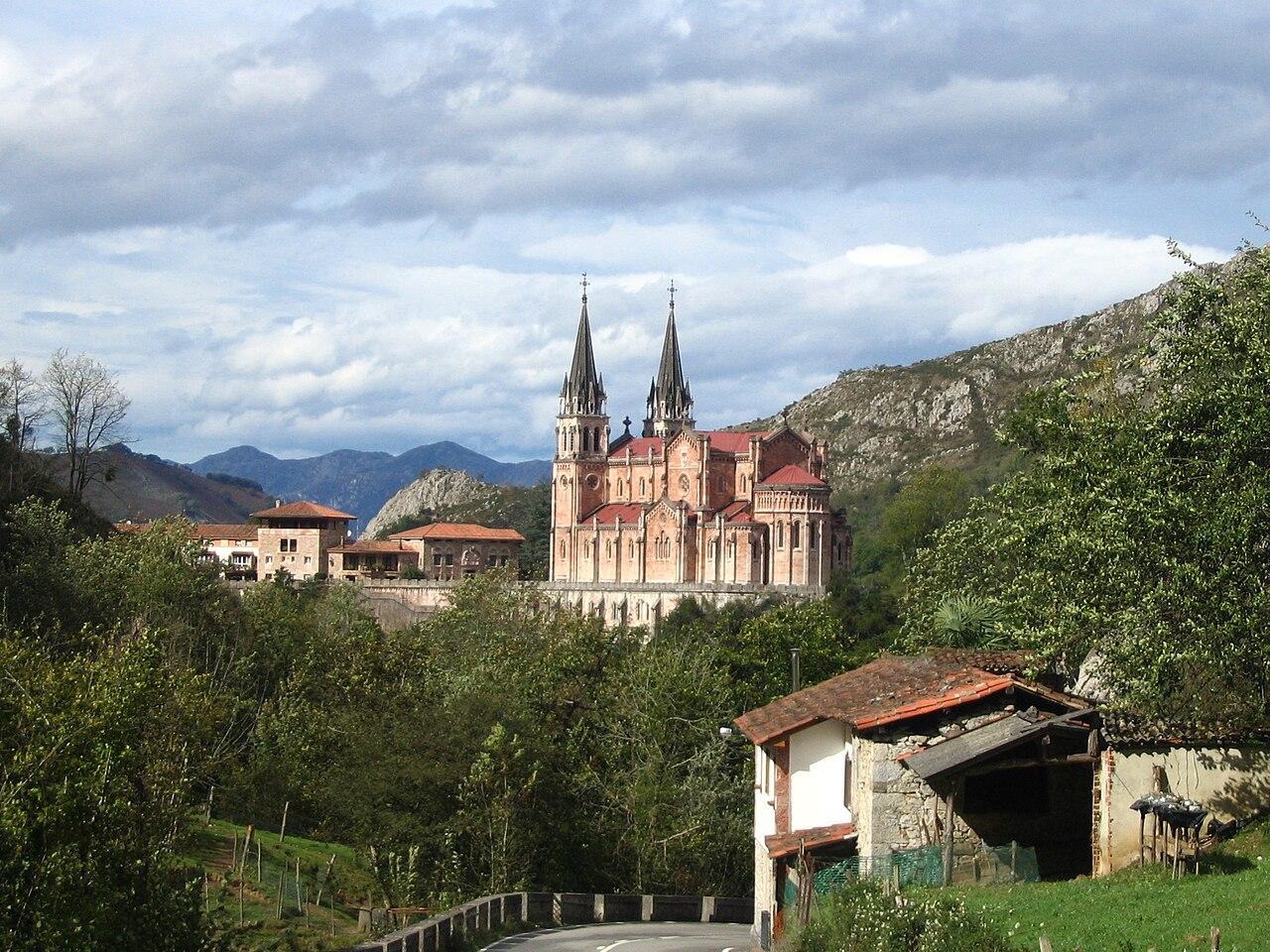
On a spur across from the cave stands the basilica of Santa María la Real, neo-Romanesque and built of pink limestone, which turns almost rose-coloured after rain. Work began in 1877, when King Alfonso XII set off the first blasting charge, and the church was consecrated in September 1901 to a design finally carried out by Federico Aparici y Soriano. Look for the Campanona, the great bell beside it: three metres high and five thousand kilos, cast in La Felguera and awarded a first prize at the Paris Universal Exhibition of 1900.
The road to the lakes
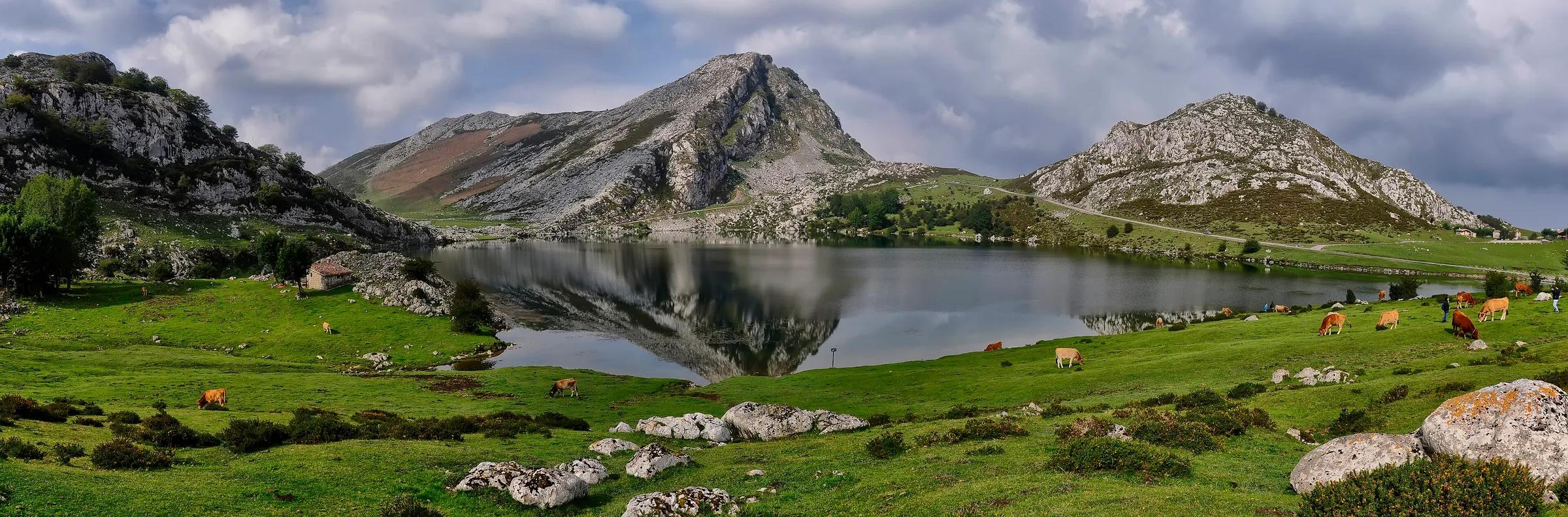
From the basilica a mountain road climbs for about twelve kilometres to the Lakes of Covadonga, Enol and Ercina, in their bowl of pasture under the limestone. On the way, about eight kilometres up, the Mirador de la Reina opens over the valleys towards the sea and has its own car park. Near the lakes, the old Buferrera mines, worked for iron, manganese and mercury until the 1970s, have been restored so that you can walk their tunnels, close to the Pedro Pidal interpretation centre.
On the busiest days, Easter, summer and long weekends, the road from Covadonga to the lakes is closed to private cars and a fleet of buses runs between Cangas de Onís, Covadonga and the lakes; outside those periods you can drive up. The dates, timetables and fares change from year to year, so we keep them in one place: our separate guide to access to the Lakes of Covadonga, which is checked against the official sources.
Seasons
There is no closed season for the town or the sanctuary. Spring brings high water to the Sella and the Mestas, and the waterfall below the cave at its loudest. Summer and early September are the busiest months, with the regulated road and the Santina's day. Autumn is the editors' choice: beech and chestnut turning on the slopes, fewer visitors, and soft light on the pink stone. In winter the lakes can be under snow and the road demanding; the valley below, by contrast, is quiet and green.
Practical
- Cangas de Onís has a tourist office; it is the best place to ask about the lakes buses and the day's conditions.
- The Santa Cueva is a place of worship: dress and behave accordingly, and keep your voice down during services.
- The Sunday market fills the centre of Cangas: lovely for produce, harder for parking.
- For the lakes, take warm layers and waterproofs even in summer; conditions change fast at altitude.
Nearby discoveries
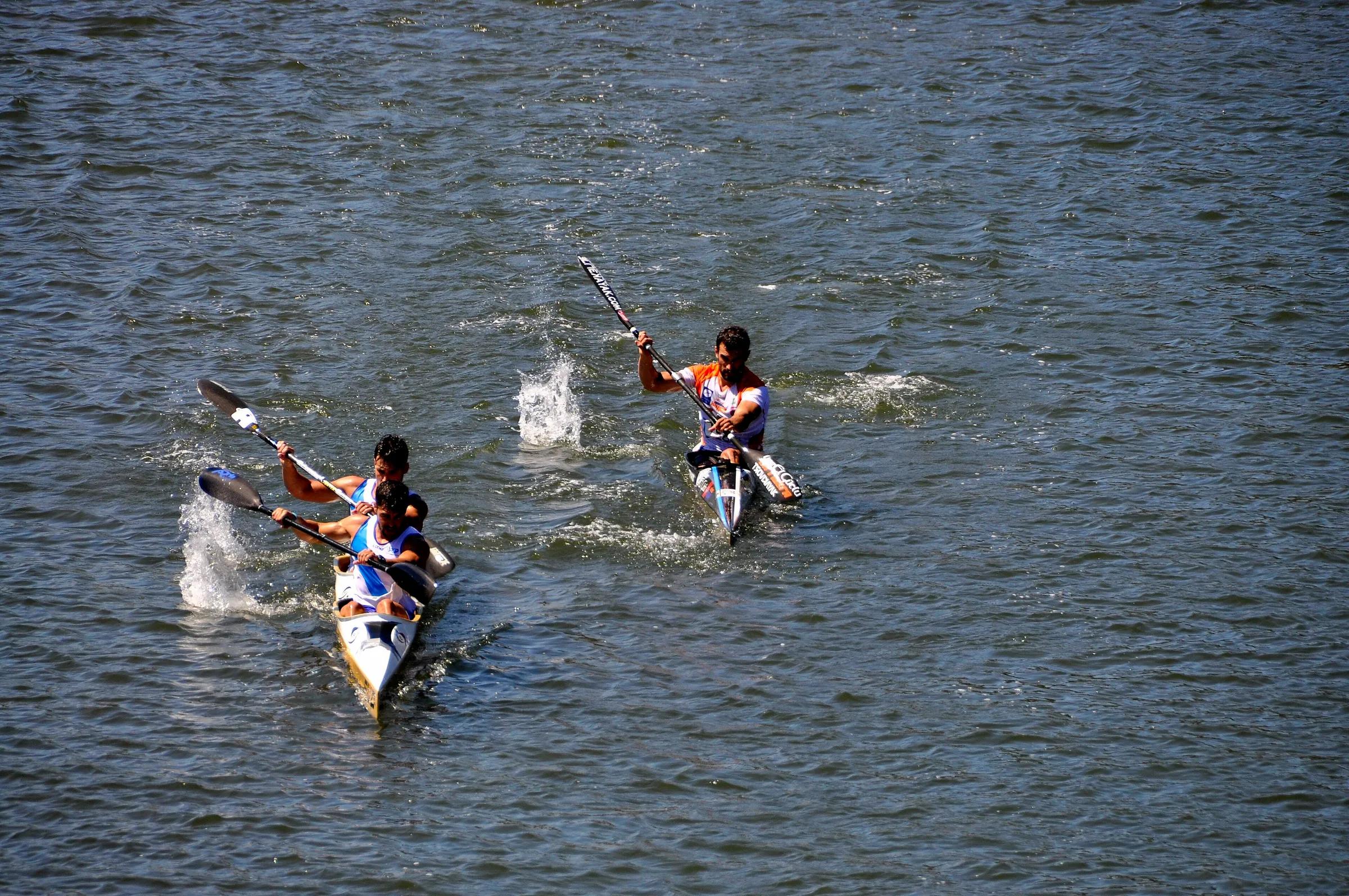
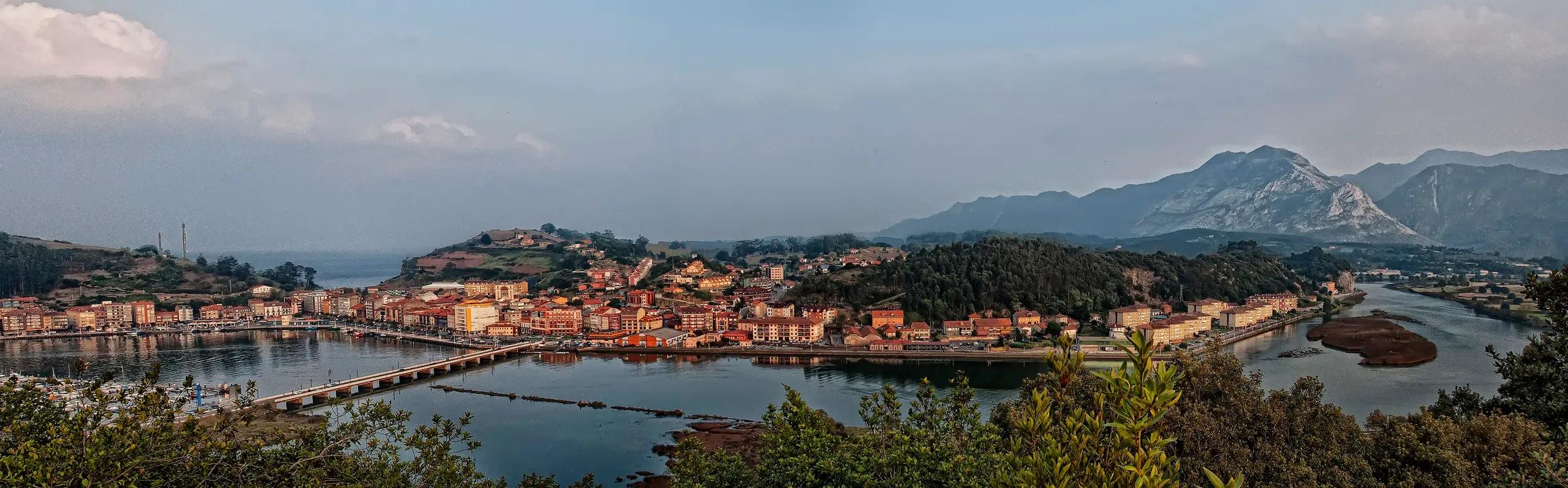
Downstream, Arriondas is where the classic canoe descent of the Sella begins, and the river then runs on to Ribadesella and the sea; both have their own guides in this series. Upstream, the Sella enters Asturias through the Los Beyos gorge. And for those who would rather earn the lakes, the climb from Covadonga is one of the great road-cycling ascents of Spain: very hard, and best left to the fit.
Nearby
Nearby, if you have time
Practical details checked on 8 November 2026. Rules, access and seasons change. Check the official sources below before you go.
Sources
- Turismo Asturias: Cangas de Onís (municipality)checked 8 November 2026
- Turismo Asturias: Covadonga, historicalchecked 8 November 2026
- Turismo Asturias: Covadonga, spiritualchecked 8 November 2026
- Turismo Asturias: Santuario de Covadongachecked 8 November 2026
- Turismo Asturias: Guide to visiting Covadonga, the lakes and surroundings (March 2026)checked 8 November 2026
- Spain.info (Turespaña): Puente Romano sobre el río Sella, Cangas de Onís(in Spanish)checked 8 November 2026
- Parque Nacional de los Picos de Europa: alerts and noticeschecked 8 November 2026
Take it further
If this story set you thinking, here is where to take it next.
Series
In the series Eastern Asturias, closely
Life & Culture
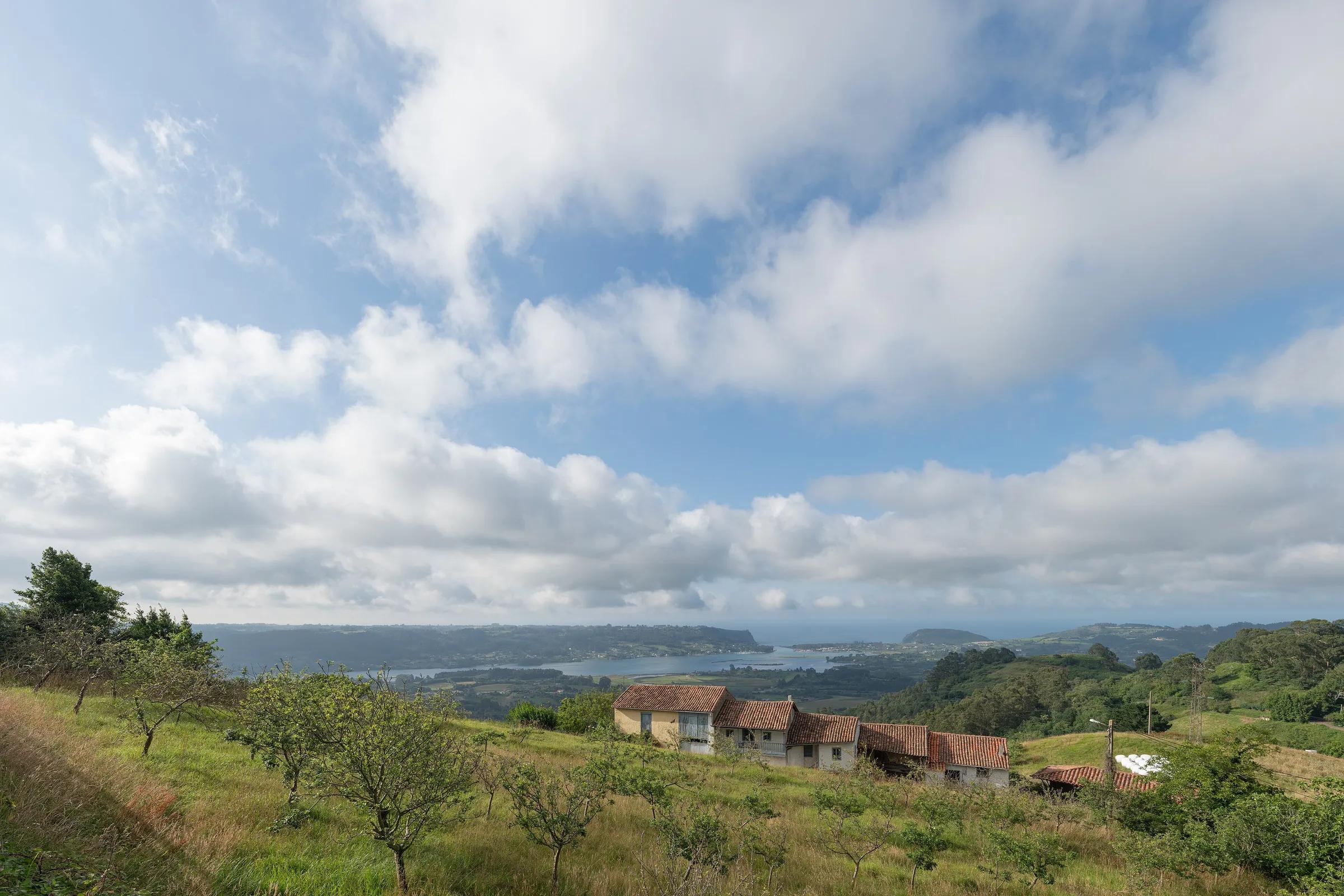
Asturian cider culture
Places & Destinations
Cangas de Onís and Covadonga
Adventure & Outdoors
Canoeing the Sella
Journeys & Road Trips
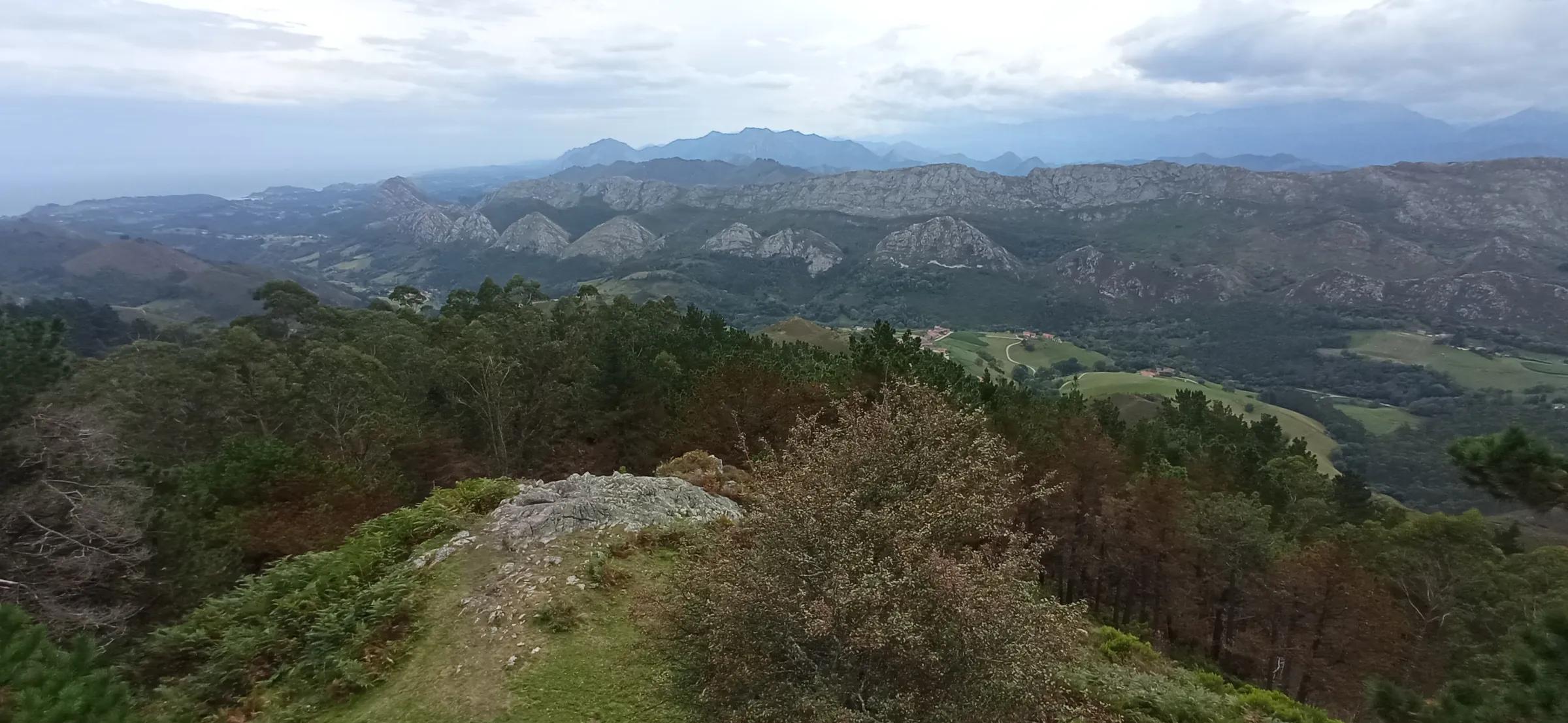
Eastern Asturias, from the coast to the peaks
Life & Culture
Hórreos: the granaries of Asturias
Places & Destinations
Ribadesella, where the Sella meets the sea
Adventure & Outdoors
Walking the Cares gorge
Places & Destinations
Getting to the Lakes of Covadonga: how access works
Adventure & Outdoors
Reading the tide on the Llanes coast